
Georgsbasilika Prag — History & Facts
Time, with its relentless march, often cloaks sorrow in splendor, reminding us of what was and what could have been. Focus on the intricate details of the basilica's facade; the ornate carvings beckon the eye with their rich textures. Notice how the light plays on the golden elements, revealing both brilliance and shadow. The warmth of the colors envelops the scene, evoking a sense of nostalgia while the architectural lines draw your gaze skyward, as if inviting contemplation of the heavens.
The composition balances grandeur and intimacy, making the viewer feel both small and part of something monumental. Beneath the surface, the piece resonates with layers of meaning. The juxtaposition of the delicate beauty of the architecture against the harshness of its historical context speaks to the struggles faced by Prague throughout its turbulent past. Each curve and line seems to whisper of resilience, with an emotional weight that invites viewers to ponder the passage of time and its impact on both the physical structure and the lives intertwined with it. Václav Jansa painted this work around 1900, a period marked by a revitalization of national identity in Bohemia, while the art world was simultaneously influenced by emerging modernist ideas.
As he depicted the Georgsbasilika, he captured not only the architectural beauty of this historic site but also the cultural significance it held for a city in transition. Amidst a backdrop of political change, his brushstrokes reflect the hope and resilience of a people determined to preserve their heritage.
More Artworks by Václav Jansa
Browse all →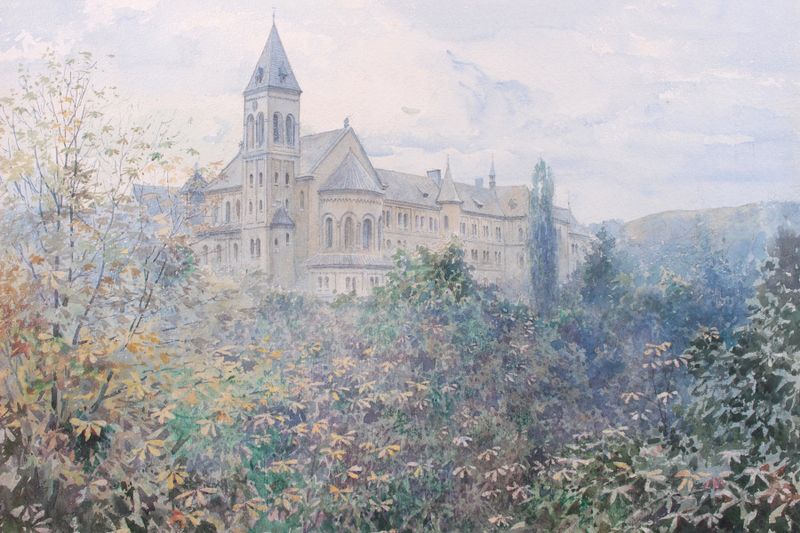
More Architecture Art
Browse all →
The statue of Liberty
Frédéric Auguste Bartholdi

View of Houses in Delft, Known as ‘The Little Street’
Johannes Vermeer

View of Houses in Delft, Known as ‘The Little Street’
Johannes Vermeer

The Cathedral in Rouen. The portal, Grey Weather
Claude Monet

The yellow house
Vincent van Gogh

The Church in Auvers-sur-Oise, View from the Chevet
Vincent van Gogh