Gewitterstimmung in den Berner Alpen — History & Facts
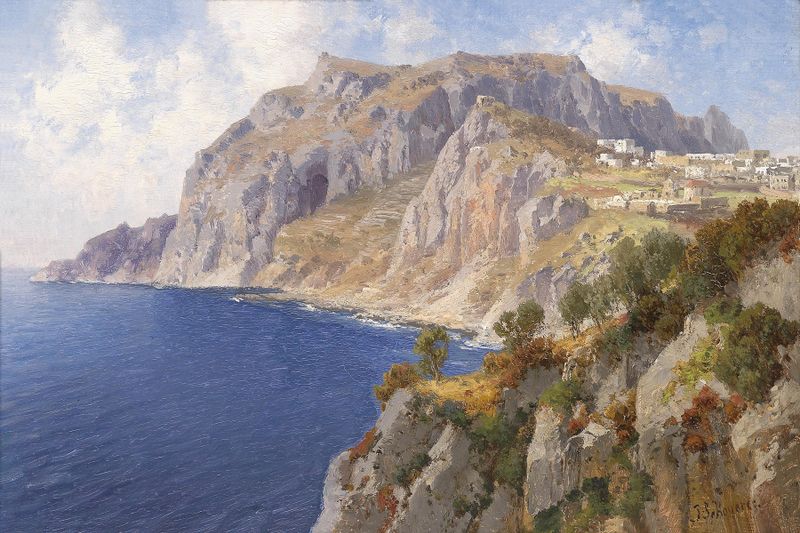
In the interplay of shadow and light, Gewitterstimmung in den Berner Alpen beckons us to explore the depths of nature's raw emotion. Here, the tumultuous skies whisper secrets of impending storms, casting a contemplative gaze on the viewer’s spirit. Focus first on the sweeping landscape, where jagged mountain peaks jut into the atmospheric turmoil above. The artist employs a dramatic palette, with deep grays and blues that swirl above the sun-kissed valleys.
Notice how the light struggles to penetrate the dense clouds, dappling the ground below in fleeting moments of brightness, showcasing Schoyerer’s masterful technique in capturing both contrast and form. Amidst this chaos, hidden narratives unfold—consider the stark juxtaposition of the turbulent sky against the serene, untouched nature below. The shadows stretch long, invoking a sense of anticipation and tension, as if nature itself holds its breath. The viewer senses the power and beauty of the alpine environment, while also contemplating the melancholy that accompanies such grandeur—the transient nature of beauty, and the inevitable approach of chaos. In 1875, Joseph Schoyerer painted this work while living in Switzerland, amidst a burgeoning interest in the romantic depiction of the natural world.
This era was marked by a shift towards realism in art, reflecting the complexities of human emotion and experience. As he navigated his own artistic journey, Schoyerer contributed to a dialogue around nature’s sublime power, encapsulating both awe and trepidation in his landscapes.