Vierwaldstätter See — History & Facts
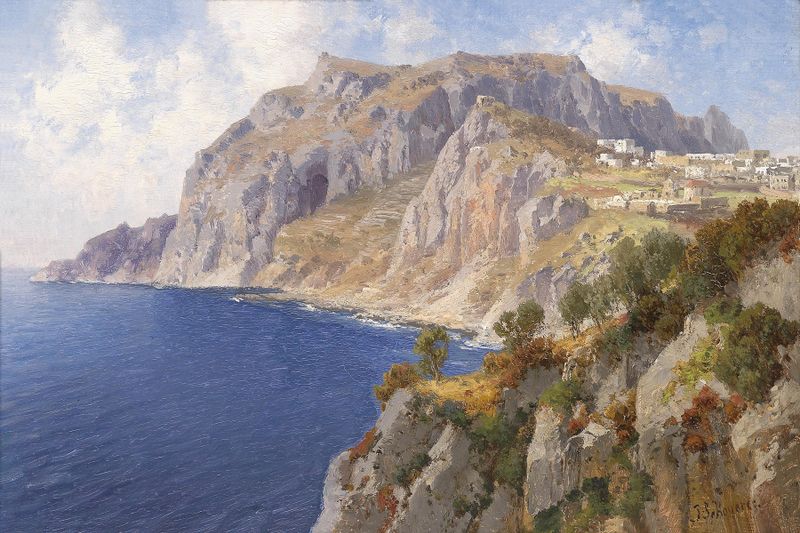
Can beauty exist without sorrow? In the stillness of Vierwaldstätter See, as the tranquil waters mirror the rugged peaks, this question hangs like a delicate mist over the landscape. Focus on the left side of the canvas where the crystalline lake glimmers, its surface capturing the subtle hues of twilight. The artist employs a soft palette of blues and greens, allowing the colors to blend seamlessly, evoking a sense of serenity. As your eyes travel across the composition, notice how the light dances upon the water, creating a shimmering pathway that invites the viewer to contemplate the depths beyond the surface. Yet, beneath this tranquil exterior lies an undercurrent of tension.
The looming mountains, formidable and majestic, cast long shadows across the lake, suggesting a duality of beauty and isolation. The delicate interplay of light and dark reveals a world where joy and melancholy coexist; the viewer may sense the weight of existence resting upon the seemingly perfect landscape, a reminder that even in beauty, one can find sorrow. Joseph Schoyerer painted Vierwaldstätter See during a time when the Romantic movement was gaining momentum in the 19th century. His work reflects an era deeply interested in the emotional experience of nature.
At that time, he was exploring the themes of transcendence and the sublime, responding to the shifting perceptions of landscape as a profound source for personal reflection within the broader context of the natural world.