Gezicht in tuin — History & Facts
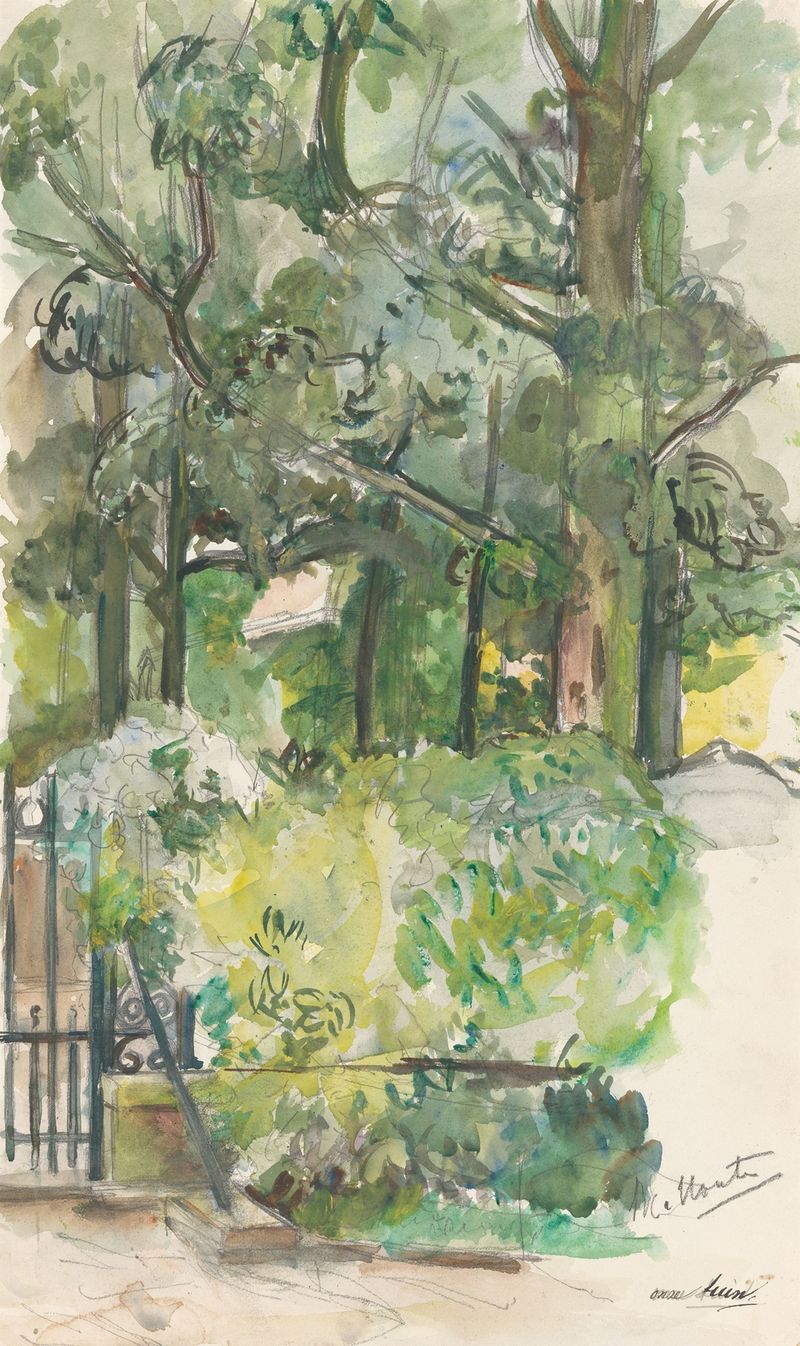
Could a single brushstroke hold eternity? In Gezicht in tuin, the fading hues and softened edges invite us to ponder the transient beauty of nature and existence itself. Look closely at the lush expanse of the garden. Notice how the light dances upon the petals of blooming flowers, casting delicate shadows on the verdant leaves. The artist employs a muted palette, with gentle greens and soft pinks merging to create a tranquil atmosphere, drawing your gaze toward the central path that meanders through this serene space.
Each brushstroke conveys a sense of layered depth, as if the scene breathes, inviting viewers to step into its embrace. Yet, amidst the beauty, there lies an underlying tension. The scattered petals hint at decay, a reminder that all beauty is fleeting. The garden, despite its vibrancy, seems suspended in a moment just before the inevitable decline.
This juxtaposition of life and decay creates an emotional resonance, urging us to reflect on our own transient moments and the cyclical nature of existence. Painted during the mid-20th century when the artist was in her prime, this work reflects a post-war period of introspection and renewal in Europe. Van Houten, living in the Netherlands, engaged with themes of nature and the passage of time, mirroring broader societal changes. In this garden, she captures not just the beauty of a moment but the essence of life itself, nuanced with both joy and melancholy.