Gezicht op Edam — History & Facts
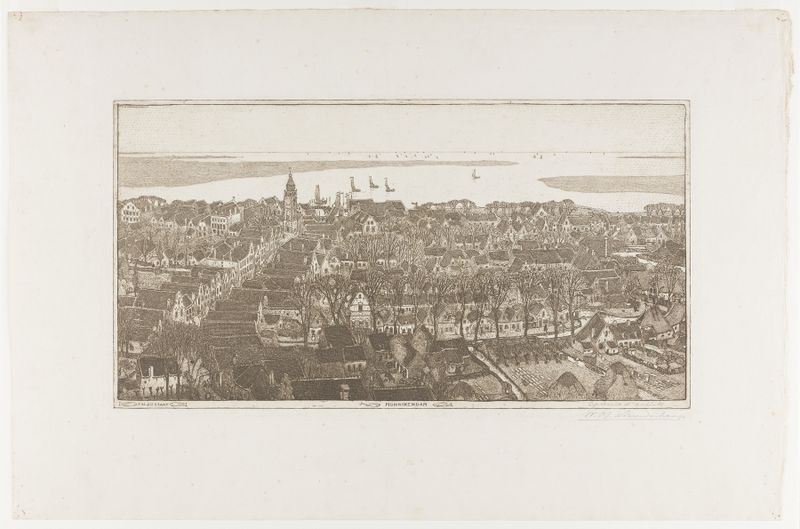
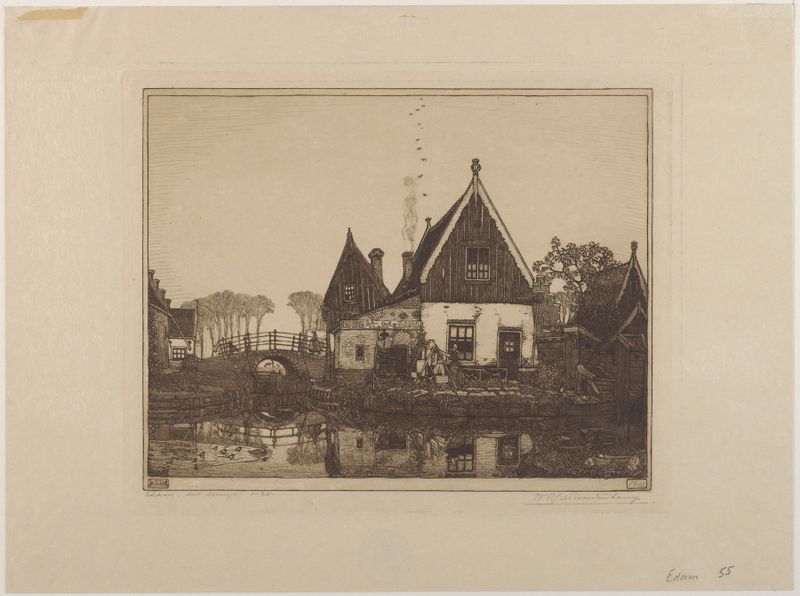
Did the painter know this moment would outlive them? In a world of transient beauty, Gezicht op Edam captures a timeless scene where the essence of rebirth lingers in each brushstroke. Look to the horizon, where a gentle twilight bathes the quaint town in shades of amber and lilac. The warm glow reflects off the still waters, inviting the eye to wander through the delicate architecture and serene canals. Notice the soft, textured strokes that breathe life into the clouds, swirling above like whispers of hope, while each element is meticulously composed, creating a balance between the sky and the land. Within this idyllic setting, contrasts emerge—light against shadow, tranquility against the potential for change.
The painted figures, though small, suggest a life unfolding; they are both a part of and apart from their surroundings. This tension speaks of a fleeting moment yet captures the enduring spirit of the landscape, hinting at the resilience of life amidst the passage of time. In 1916, Wijnand Otto Jan Nieuwenkamp painted this work during a period of artistic exploration in The Netherlands. Post-Impressionism was gaining traction, and he was deeply influenced by the interplay of light and color.
As Europe faced the turmoil of World War I, Nieuwenkamp found solace in the beauty of everyday life, channeling his experiences into landscapes that offered not only an escape but also a sense of renewal.