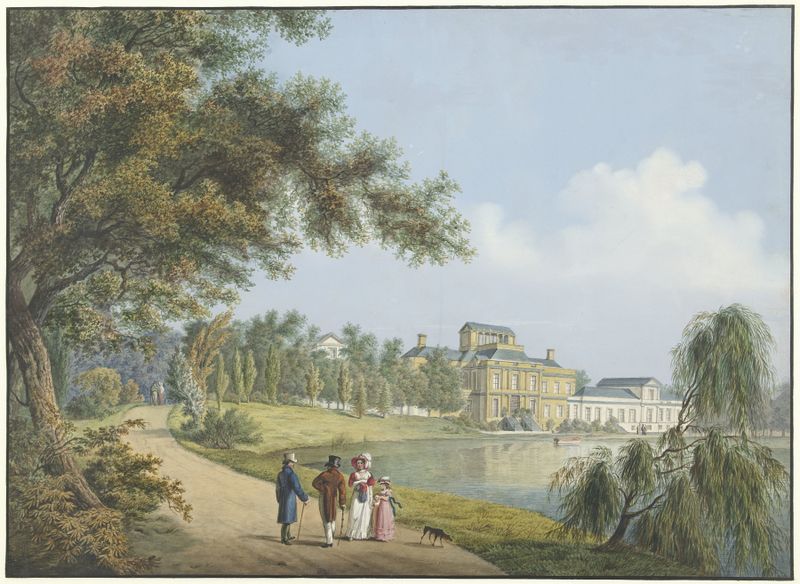
Gezicht op paleis Het Loo — History & Facts
Could beauty survive in a century of chaos? Look to the left at the meticulously crafted façade of the palace, its classical lines cutting through the lush landscape with an air of both strength and elegance. The soft glow of sunlight illuminates the intricately detailed architecture, while the surrounding gardens overflow with vibrant flora, inviting the viewer to stroll through a serene oasis. Notice how the rich hues of green and the delicate pastels of the flowers juxtapose against the grandeur of the palace, evoking a sense of peace amidst the intricacies of existence. Yet, hidden beneath this tranquil surface lies a deeper tension.
The palace, a symbol of power and stability, stands sentinel over a world marred by violence and upheaval. The peaceful gardens might mask the grand narratives of conflict that unfolded during this period. In the delicate brushstrokes that capture the stillness of nature, one can sense a yearning for a stability that seemed perpetually out of reach, as societal turbulence loomed beyond the canvas edges. Cornelis de Kruyff painted this remarkable view of Het Loo between 1784 and 1828, during a time when Europe was in the throes of dramatic change.
The aftermath of the French Revolution was shaking the foundations of monarchies, and the ideals of liberty and equality were reshaping societies. De Kruyff, working in the Netherlands, sought to immortalize a fleeting sense of beauty within an increasingly chaotic world, reflecting both his devotion to the aesthetic and an awareness of the fragility of such tranquility.