Gezicht op paleis Soestdijk — History & Facts
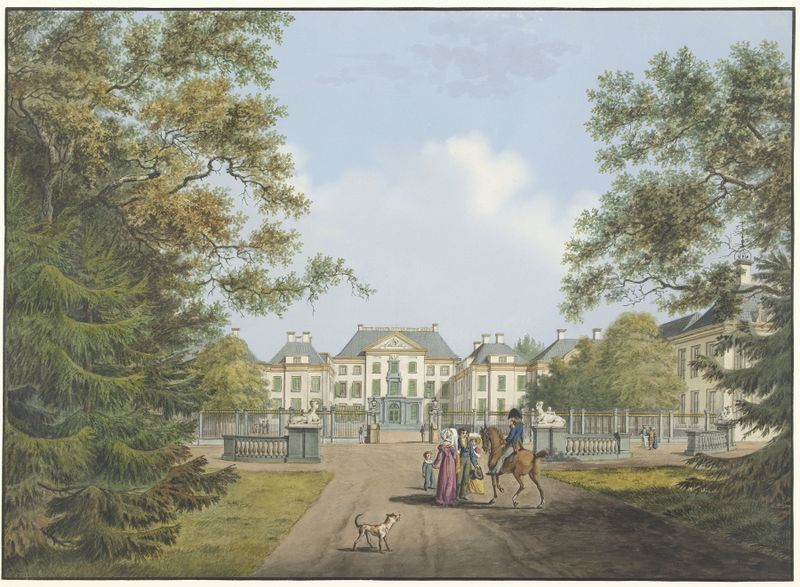
Is this a mirror — or a memory? The canvas before you invites contemplation on the passage of time, where past and present intertwine, rendered in nuanced brushstrokes. Look to the left at the majestic structure of the palace, its elegant lines rising against a backdrop of gentle clouds. Notice how the light bathes the façade, creating a soft glow that hints at both warmth and nostalgia. The meticulously painted trees encircling the estate draw your gaze inward, framing the scene and establishing a sense of tranquility that resonates throughout the piece.
The delicate interplay of greens and blues evokes a serene atmosphere, inviting viewers to linger in this idyllic moment. Yet, beneath this calm exterior lies an exploration of impermanence. The stillness of the palace contrasts sharply with the moving clouds above, symbolizing the relentless march of time. The careful detailing of the foliage speaks to nature’s endurance, while the distant horizon suggests the inevitability of change.
Each element, from the architecture to the natural surroundings, reflects a deeper dialogue about legacy, heritage, and the fleeting nature of existence. Cornelis de Kruyff created this work between 1784 and 1828 during a period marked by significant transformation in Dutch art. As neoclassicism began to wane, artists grappled with the tensions of modernity and tradition. This painting, depicting the royal palace Soestdijk, connects the historical significance of the site with the evolving aesthetic values of its time, capturing a moment that resonates far beyond its canvas.