Gezicht te Rijswijk Batavia — History & Facts
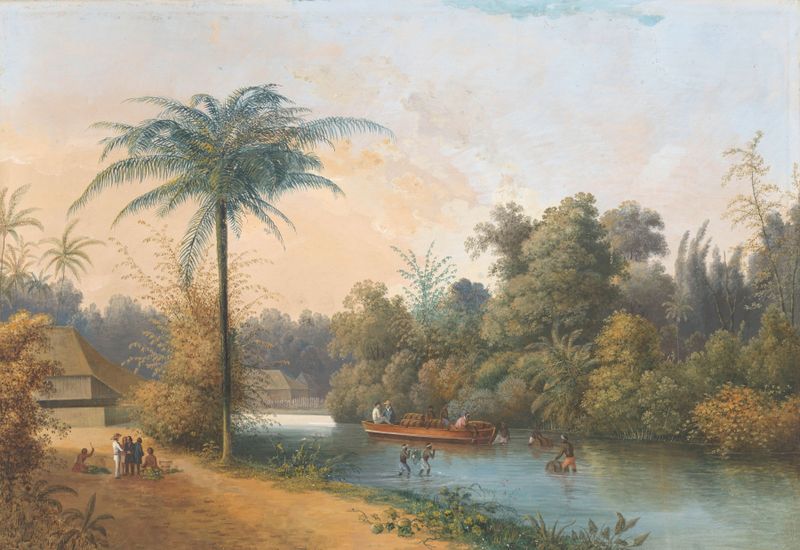
This sentiment resonates deeply when encountering this exquisite piece, where serenity intermingles with a haunting undercurrent of longing. Look to the left, where the delicate brushstrokes create the lush foliage of Rijswijk, lush and vibrant, drawing the eye into the verdant landscape. The tranquil waters reflect soft hues of turquoise and azure, inviting contemplation. Notice how the light dances upon the surface, illuminating the scene and casting gentle shadows that hint at movement—a subtle reminder of life and transience.
One cannot help but be captivated by the harmonious colors, which blend seamlessly to evoke both warmth and nostalgia. As you delve deeper, the interplay between light and shadow reveals a contrast that speaks volumes; the idyllic beauty is tinged with an underlying melancholy. The distant figures, seemingly at peace with their surroundings, carry an air of solitude, perhaps echoing an unspoken yearning for something beyond the horizon. The stillness of the scene juxtaposes the vibrant colors, creating a profound tension that suggests a deeper narrative—a search for transcendence amidst the ordinary. Charles William Meredith van de Velde painted this work between 1838 and 1898, a period marked by a transformative era in art and society.
Working in the Netherlands and later in Java, he found inspiration in both European tradition and the exotic allure of the East. This duality reflected in his work was a response to the changing tides of nationalism and artistic expression, as artists began to explore a broader range of experiences and emotions, transcending mere representation.