Waterval te Tjieroek Betong Java — History & Facts
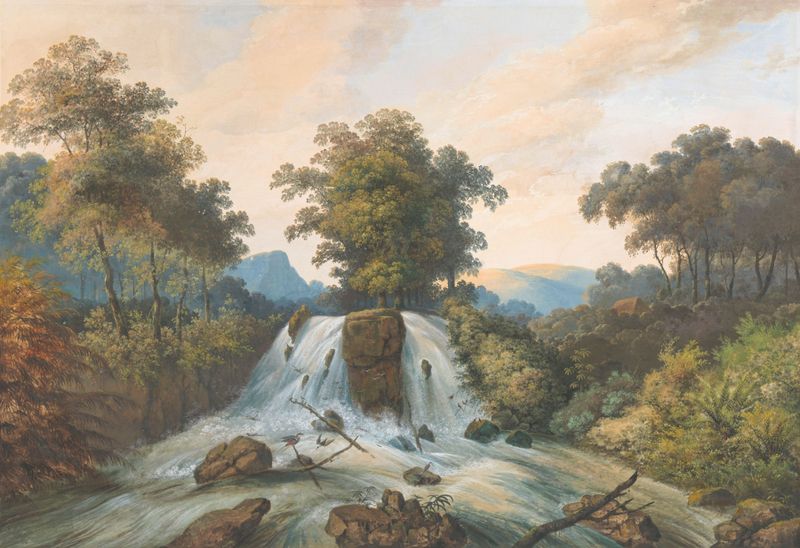
Is this a mirror — or a memory? In Waterval te Tjieroek Betong Java, innocence dances across the canvas, inviting us to lose ourselves in its tranquil embrace. Look to the right where the waterfall spills gracefully down the rocks, its silvery cascades contrasting sharply with the lush greens that envelop it. The interplay of light and shadow creates a symphony of movement, drawing the eye towards the natural wonder that sits at the heart of the composition. The soft pastels breathe life into the scenery, lending a dreamlike quality that blurs the lines between the real and the imagined. A sense of nostalgia pervades the painting, evoking a longing for a simpler time.
The waterfall might represent both the purity of untouched nature and the fleeting nature of innocence itself, as water flows relentlessly onward. The distant silhouettes of figures, perhaps observing or wandering, hint at the transient nature of our experiences, while the vibrant foliage symbolizes the growth that comes from those moments of discovery. Created between 1838 and 1898, this work emerged during a period of exploration for Charles William Meredith van de Velde, who often sought to capture the essence of exotic locales. Living in the shadow of burgeoning European colonialism, the artist turned his gaze to Java, where he found beauty in the untamed landscapes.
This painting reflects not only his personal journey but also the era's fascination with the natural world, making it a significant piece in the context of 19th-century art.