Gibbons in a Landscape — History & Facts
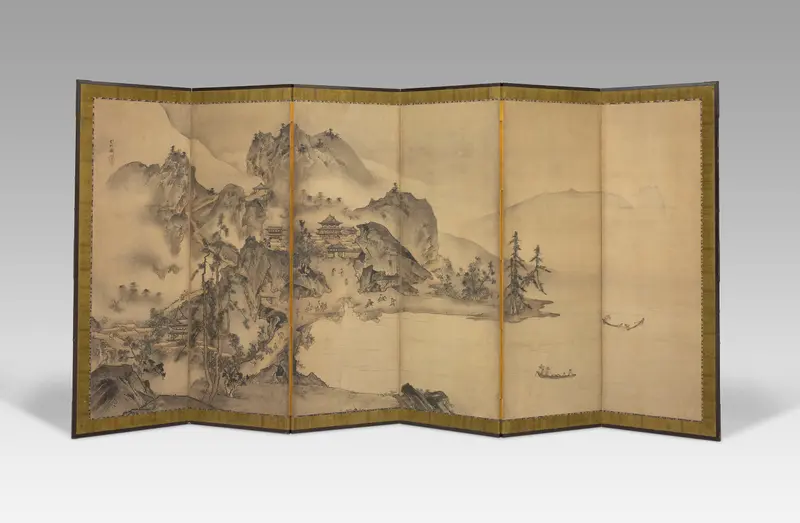
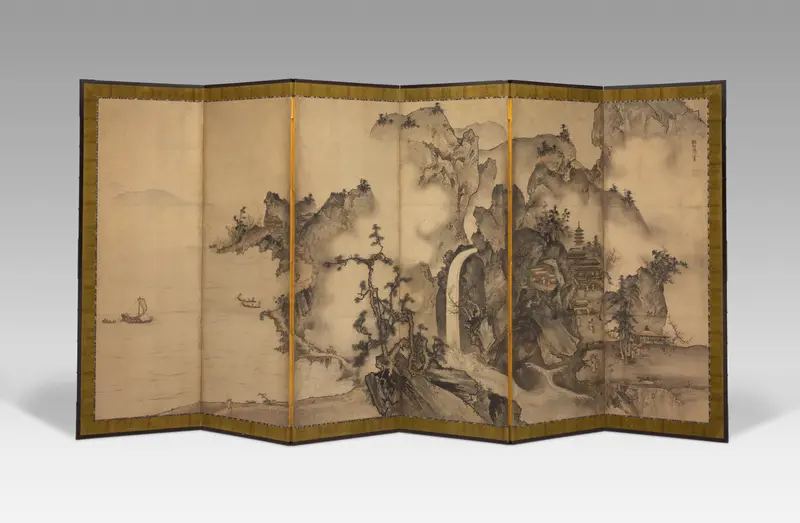
A pair of six-panel folding screens by Sesson Shukei from around 1570 presents gibbons among rocks, trees, and flowing water rendered in ink on paper. The composition is spread across both screens, with gibbons perched on rocky outcrops, clinging to tree branches, and interacting with one another. The landscape is built with expressive brushwork, using washes and fine lines to suggest mist, foliage, and the texture of bark, while the gibbons are depicted with careful attention to their form and movement.
The palette is limited to shades of ink, emphasizing contrast between the animals and their natural surroundings. Screen paintings featuring animals in landscape became popular in Japan during the Muromachi and Momoyama periods, often drawing on Chinese ink painting conventions. Sesson Shukei was active in the late 16th century and is known for his adaptations of Chinese literati themes into Japanese settings, frequently using monochrome ink and dynamic brushwork. This work dates to about 1570 and exemplifies the period’s interest in both natural observation and expressive technique.
The pair of screens format allowed such compositions to serve as both decorative and contemplative objects within elite interiors.