Glen Inagh, Connemara — History & Facts
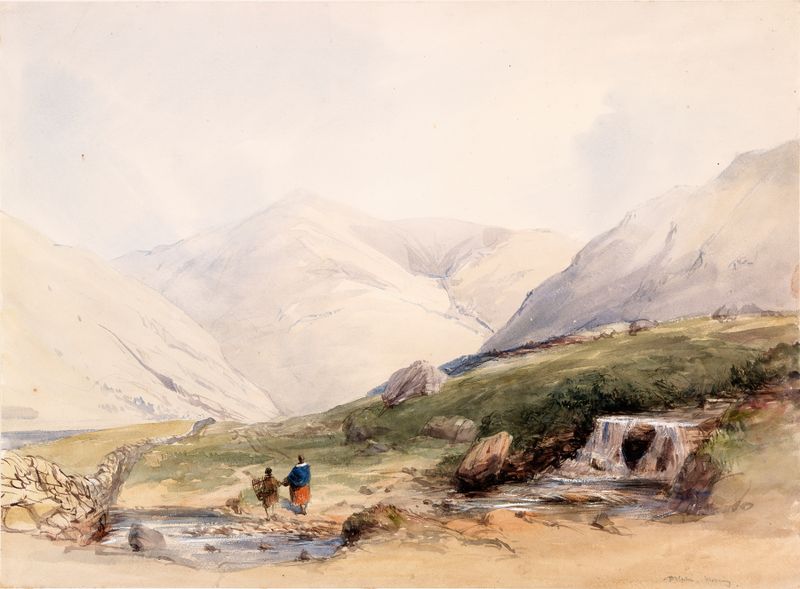
In Glen Inagh, Connemara, the landscape whispers the echoes of fleeting moments, inviting the viewer to step into a memory made tangible. Look to the left, where the silvery sheen of a winding river glistens under the soft embrace of dawn. Notice how the rich greens and earthy browns blend seamlessly, creating a harmony that is at once soothing and exhilarating. The distant mountains rise majestically against a pale blue sky, their peaks kissed by tender wisps of cloud, while the delicate strokes of the foreground suggest the movement of grass swaying in the gentle breeze.
Each layer of paint reveals not just the physicality of the landscape, but its emotional depth, urging us to reflect on the passage of time. The tension here lies in the contrast between stillness and movement. The tranquil waters mirror the vibrant colors of the sun's awakening, yet they also recall the transformative nature of memory—how moments can both stand still and slip away. The artist captures the ethereal quality of light, which dances across the scene, suggesting that while the landscape remains unchanged, our perception of it shifts with every glance.
The interplay of shadow and light reveals an underlying narrative of beauty and solitude, evoking a sense of longing for the past. William Evans of Eton painted this piece in 1838 during a time when the Romantic movement was flourishing in art, emphasizing the sublime beauty of nature. Living in England, he embarked on a journey to capture the wild landscapes of Ireland, a country rich in emotional and historical significance. This work reflects not only his personal exploration of identity and memory but also the broader cultural shift towards appreciating the emotive power of the natural world.