Landscape, Isle of Aran — History & Facts
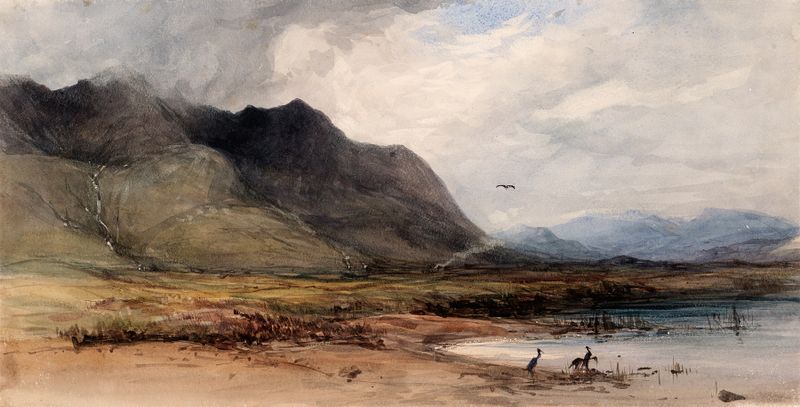
Did the painter know this moment would outlive them? The quiet grace of a landscape holds whispers of time, melding the ephemeral with the eternal. Look to the left at the rugged coastline, where the dark rocks jut defiantly into the sea, their edges kissed by white foam. The artist’s deft brushwork creates a sense of movement, as if the crashing waves are caught in mid-spiral. Notice how the light dances across the surface of the water, shifting from deep cerulean to shimmering silver, illuminating the undulating forms that suggest both peace and unrest. In this composition, contrasts abound: the solidity of the land meets the fluidity of the ocean, embodying a paradox of permanence and transience.
The soft clouds in the sky, painted in muted pastels, create a serene backdrop against the tumultuous sea, hinting at the complexities of nature. Each stroke conveys a delicate tension, as if the landscape itself breathes in tandem with the artist's emotions, forging a connection that transcends time. William Evans of Eton created this work during a period of artistic exploration in the late 19th century, likely influenced by the burgeoning Impressionist movement. His focus on light and atmosphere reflects broader shifts in the art world as artists sought to capture fleeting moments.
The exact date remains elusive, yet the essence of the Isle of Aran endures, echoing the artist's intent to immortalize the beauty of a specific place and time.