
God’s House Tower, Southampton — History & Facts
In the brushstrokes of God’s House Tower, we encounter not just a building, but a silent witness to the passage of time—a vessel of transformation amid the relentless march of history. Look to the left, where the weathered stones of the tower rise against a backdrop of soft, enveloping clouds. The interplay of light and shadow creates a sense of ethereal presence, accentuating the tower's intricate architectural details. Notice how the artist employs a muted palette, allowing the gray and brown hues to evoke a feeling of nostalgia, as if the very air is infused with tales of the past.
Each brushstroke breathes life into the stony facade, reminding us of the enduring nature of human endeavor. Delve deeper and consider the contrasts at play—the solidity of the tower against the ephemeral sky, each element embodying a different aspect of human experience. The starkness of the structure speaks to strength and permanence, while the shifting clouds suggest the inevitability of change. This juxtaposition invites reflection on our own transience amidst the legacies we build.
The subtle details, like the slightly crumbling edges, hint at the fragility of what we deem eternal, emphasizing the transformative power of time itself. Pether created this work during a period when Romanticism was gaining momentum, likely in the early to mid-19th century. Living in Southampton, he was captivated by the rich maritime history of the area. This era marked a burgeoning interest in capturing local landscapes, and the artist’s focus on God’s House Tower reflects a broader movement within art to celebrate and preserve the essence of place against the backdrop of rapid industrialization.
More Artworks by Henry Pether
Browse all →
A View of the Bacino di San Marco with the Doge’s Palace and the Church of Santa Maria della Salute in the Distance, by Moonlight
Henry Pether
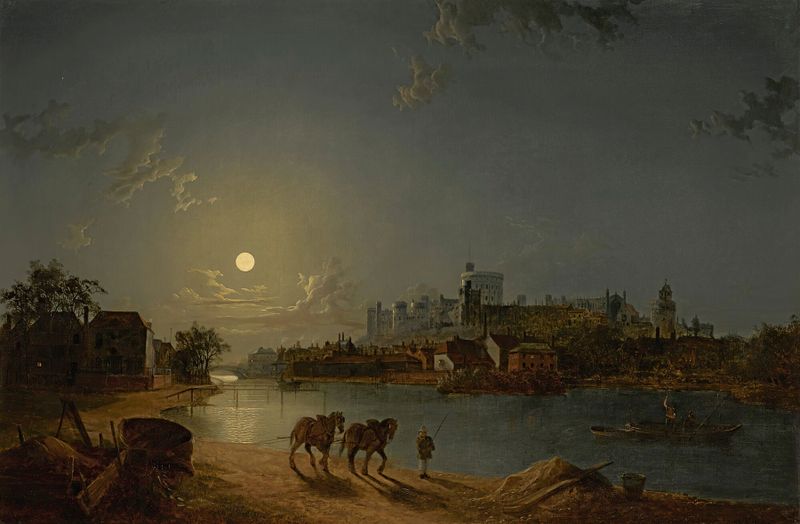
Windsor From The Thames
Henry Pether

Horseguards Parade from St James’s Park
Henry Pether

Moonlight on the Grand Canal, Venice
Henry Pether
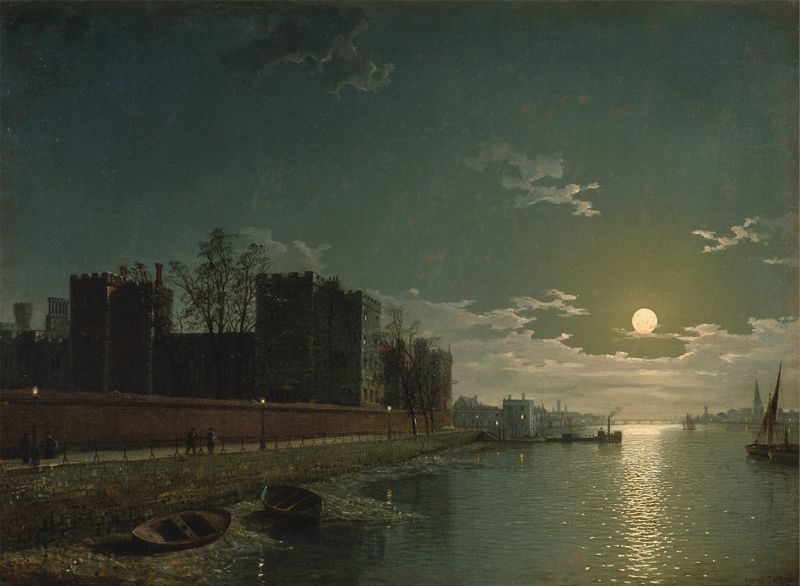
Lambeth Palace
Henry Pether

The Band Stand, Vauxhall Royal Gardens
Henry Pether
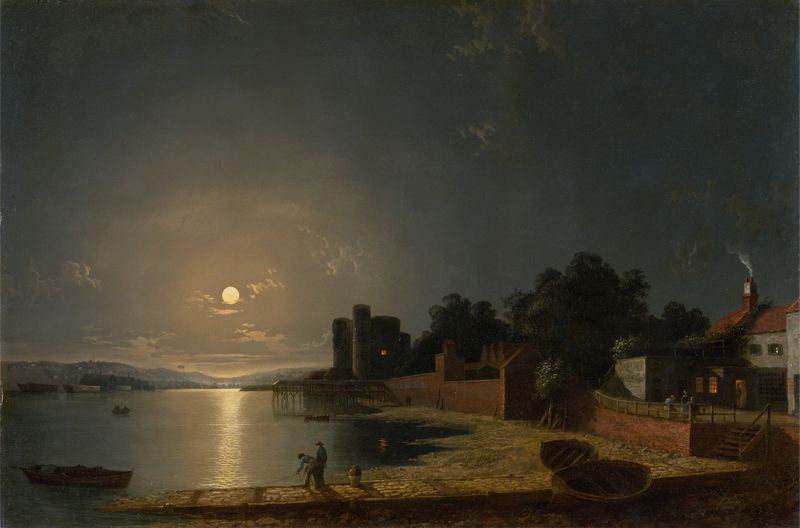
Upnor Castle, Kent
Henry Pether

Port Of London
Henry Pether
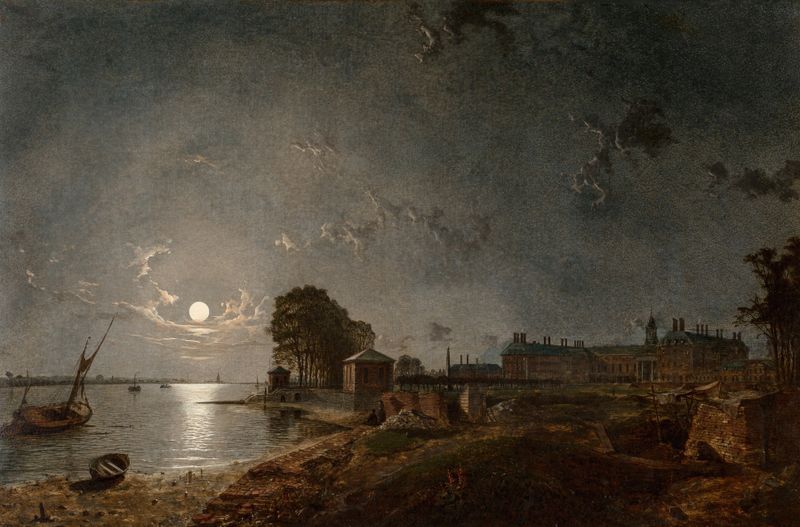
The Royal Hospital, Chelsea
Henry Pether
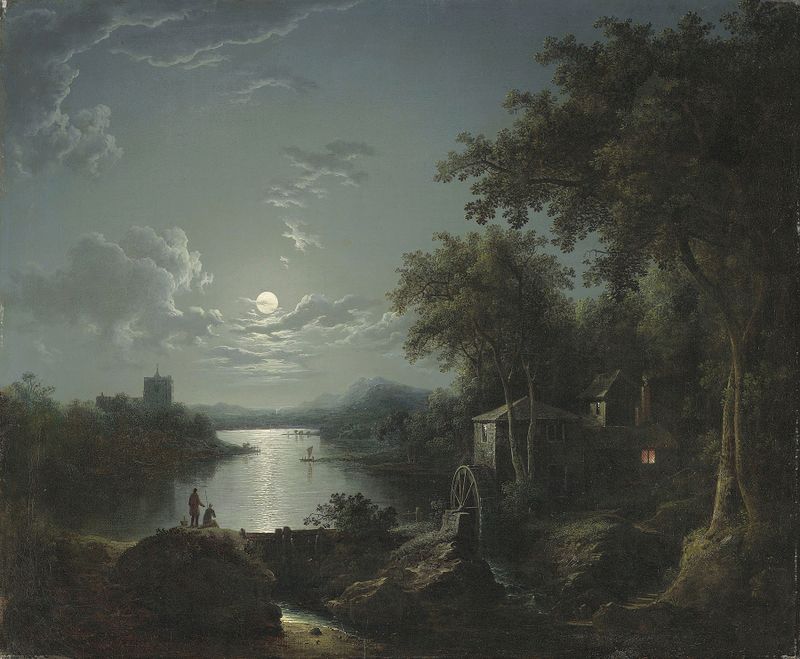
Moonlit fishing on the riverbank
Henry Pether
More Architecture Art
Browse all →
The statue of Liberty
Frédéric Auguste Bartholdi

View of Houses in Delft, Known as ‘The Little Street’
Johannes Vermeer

View of Houses in Delft, Known as ‘The Little Street’
Johannes Vermeer

The Cathedral in Rouen. The portal, Grey Weather
Claude Monet

The yellow house
Vincent van Gogh

The Church in Auvers-sur-Oise, View from the Chevet
Vincent van Gogh