Golden Afternoon — History & Facts
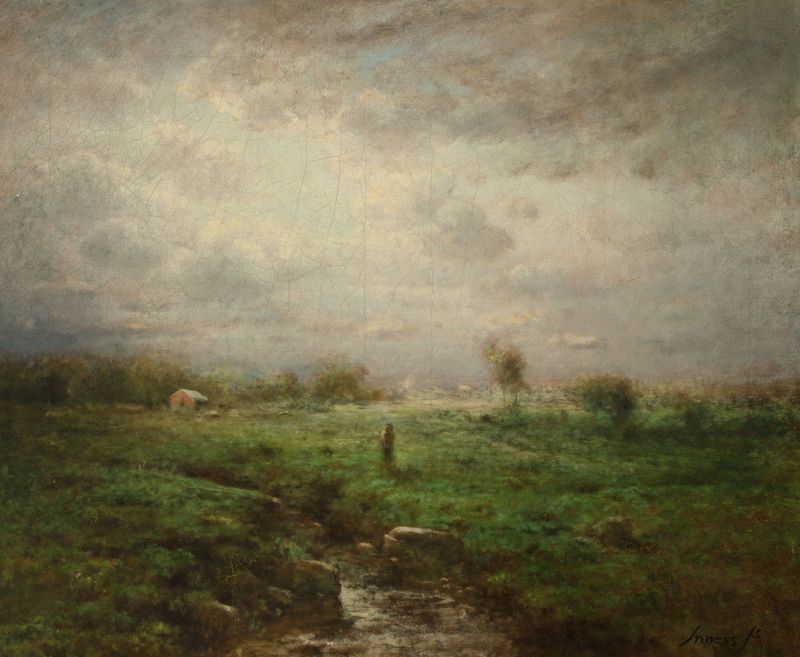
In the stillness of a golden afternoon, fragility hangs in the air, whispering the unspoken truths of nature and life. Look to the left, where soft sunlight bathes the landscape in a warm embrace, illuminating a path that leads the viewer into the heart of the composition. The lush greens and gentle yellows blend harmoniously, guiding the eye toward the horizon, where distant trees stand like silent witnesses to the passage of time. Notice how Inness Jr.
employs delicate brushstrokes to convey the texture of the foliage, invoking a sense of serenity that resonates with the viewer’s own introspections. Yet beneath the tranquil surface lies a tension of impermanence. The fleeting light highlights the transitory nature of the moment, while the softness of the surroundings evokes a poignant sense of nostalgia. Each element—the trees, the path, the play of light—seems to remind us of the fragility of existence, inviting contemplation on our own ephemeral journeys through life. In 1919, Inness Jr.
painted this piece during a time of personal reflection, following the chaos of World War I. His work often emphasized the spiritual connection between humanity and the natural world, and amidst the changing tides of society, he sought solace in the landscapes around him. This painting embodies his quest to capture the sublime beauty of fleeting moments, asserting that even in silence, there is profound meaning to be found.