Goose and Small Banana Leaf — History & Facts
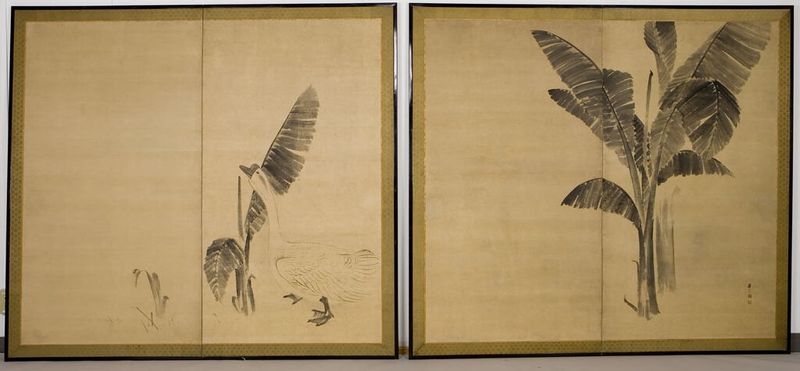
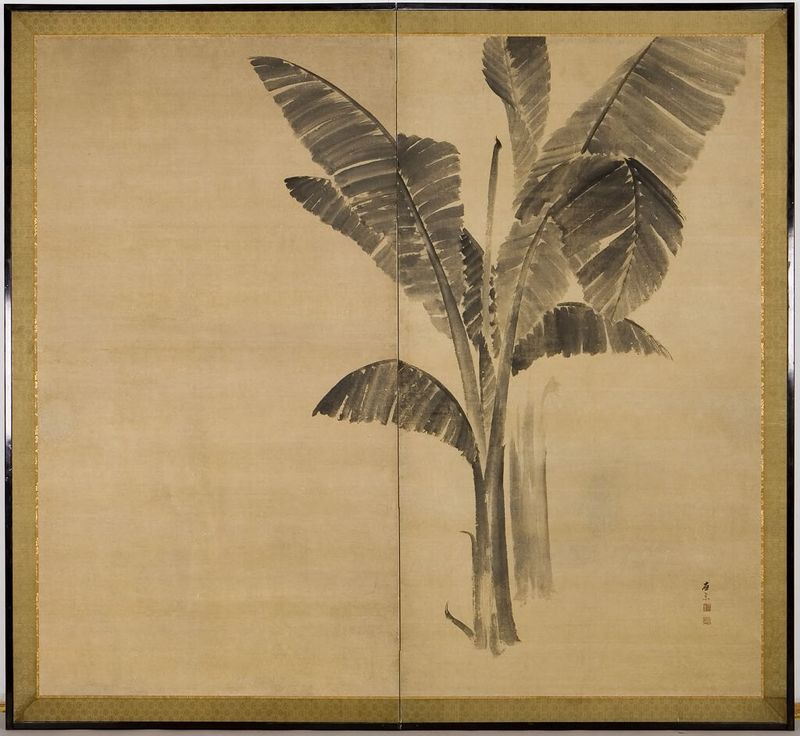
What if beauty was never meant to be finished? In the delicate interplay of forms and colors, Goose and Small Banana Leaf teases the boundary between the real and the imagined, inviting the viewer to ponder the nature of illusion in art. Look to the left at the elegantly poised goose, its feathers rendered with meticulous precision, each stroke revealing the artist's mastery of texture and light. The gentle curve of the banana leaf draws the eye, its vibrant green contrasting with the soft whites and grays of the bird. The composition is balanced yet dynamic, as the subtle shadows and highlights breathe life into the scene, creating an almost ethereal quality that blurs the lines between nature and artistry. Within this tranquil moment lies a tension between simplicity and complexity.
The goose, a symbol of fidelity and grace, is juxtaposed against the lush, tropical leaf, evoking themes of harmony in nature. The viewer may sense the fleeting nature of beauty, as the intricacies of the work hint at the transient moments that define existence. Each detail holds significance, urging us to recognize the depth behind seemingly ordinary subjects. Painted during the late 18th to early 19th century, this work encapsulates a pivotal time in Japanese art history, when the boundaries of traditional ukiyo-e were being tested.
Maruyama Ōkyo was at the forefront of this evolution, experimenting with Western techniques and naturalism while maintaining the essence of Japanese aesthetics. His exploration reflected a broader cultural shift, as Japan began to open up to new ideas and influences, ultimately reshaping the artistic landscape of the era.