Banana Leaf and Goose : fusuma paintings mounted as a pair of folding screens — History & Facts
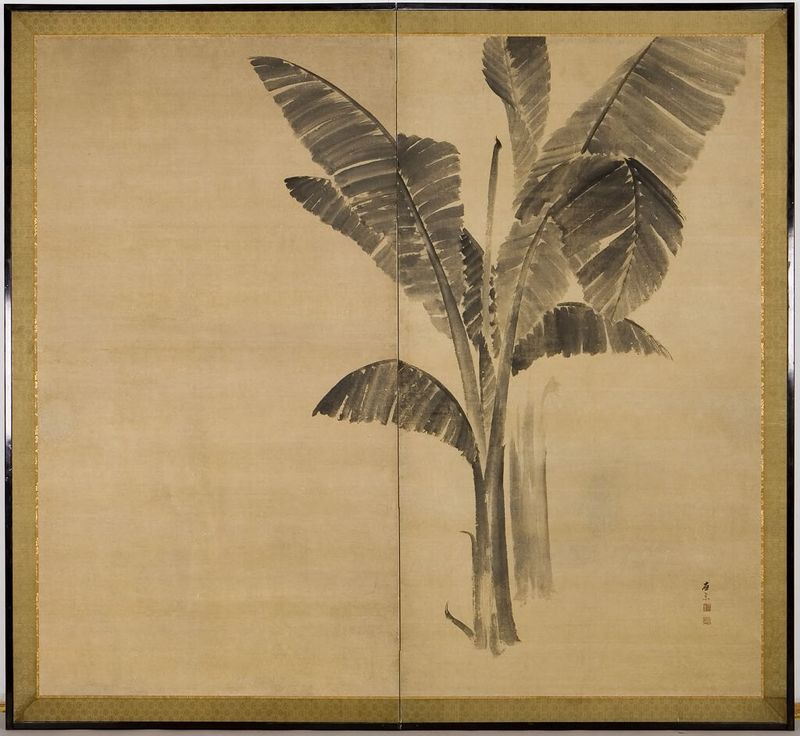
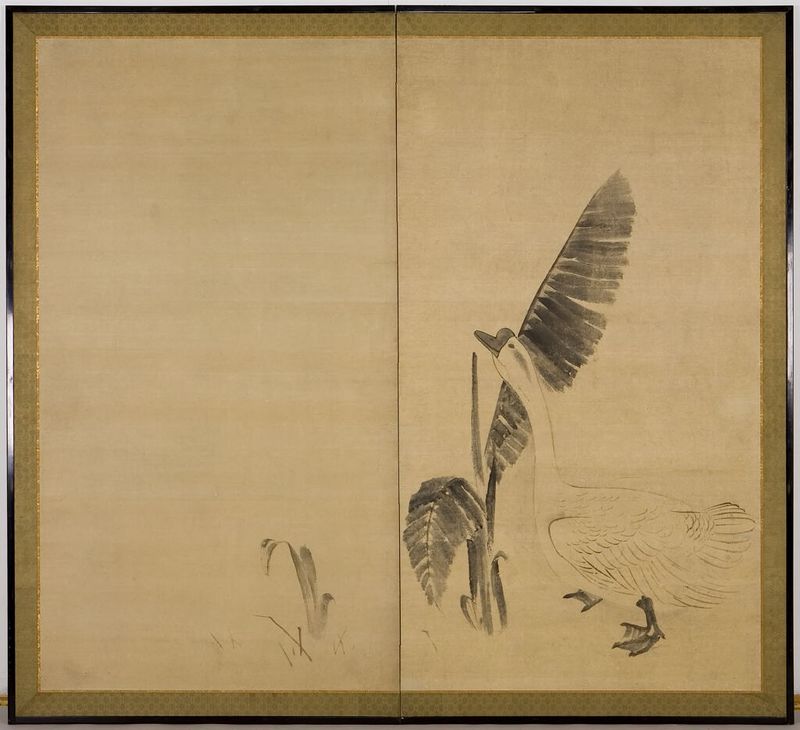
What if silence could speak through light? In the delicate brushstrokes of this artwork, nostalgia resonates, whispering stories of nature’s tranquil beauty and the fleeting moments of time. Look to the left, where the lush banana leaves unfurl with graceful elegance, their rich greens contrasting against the soft, muted background. The intricate detailing invites your gaze, revealing subtle veins that capture the interplay of shadow and light. Notice how the gentle curves of the leaves create a harmonious rhythm, drawing your eye across the folding screens, while the solitary goose, rendered with exquisite precision, stands sentinel in a serene pose, embodying stillness amidst the vibrant foliage. Every element here speaks to a balance between nature and artistry.
The juxtaposition of the dynamic foliage against the calm presence of the goose creates a tension, a longing for connection to nature that echoes through the ages. The technique of using color and light not only showcases the artist’s skill but also evokes an emotional pull, reminding viewers of the beauty that surrounds them yet often goes unnoticed. During the late 18th to early 19th century, Maruyama Ōkyo, a pivotal figure in Japanese painting, created this pair of folding screens as part of his innovative approach to the genre. Living in Kyoto, he was at the forefront of a movement that sought to merge Western realism with traditional Japanese aesthetics.
This period saw a burgeoning interest in naturalism, and as the art world began to embrace new influences, Ōkyo’s work stood as a bridge between past traditions and contemporary exploration.