Grand Canyon — History & Facts
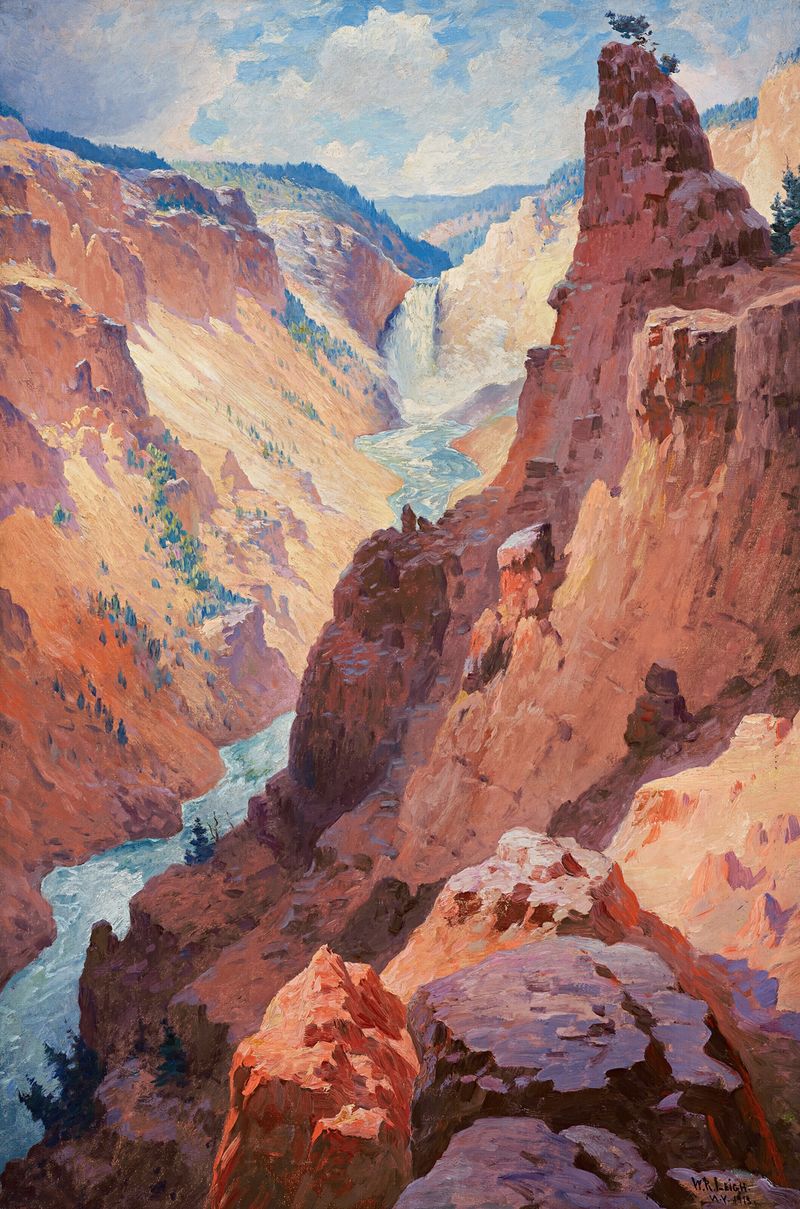
As the world shifts with time, the landscapes that cradle our memories transform, capturing the essence of fleeting moments. Focus first on the sweeping expanse of the canyon, where rich hues of rust and ochre embrace the rugged cliffs. The dynamic play of light dances across the surface, illuminating the crevices with a golden glow that seems almost alive. This vibrant interplay draws the viewer’s gaze, inviting a journey through the undulating textures, while the majestic sky above unfurls in a deep azure, hinting at vast possibilities beyond the earthbound. Within this striking vista lies a deeper narrative of transformation.
The juxtaposition of the jagged, rugged terrain against the softness of the sky evokes a sense of resilience and change, as nature endures through the ages. Tiny flecks of green punctuate the landscape, representing life and renewal amidst the stoic grandeur of stone. These elements speak to the relentless passage of time and the quiet, yet powerful, evolution of the natural world. In 1917, during a period of personal exploration and broader artistic evolution, the creator immersed himself in the American West, captivated by its raw beauty.
As a noted landscape painter, this work emerged against a backdrop of shifting artistic movements, where the grandeur of the American landscape began to be celebrated as a symbol of national identity. This painting exemplifies that pivotal moment in both the artist's journey and the broader narrative of American art.