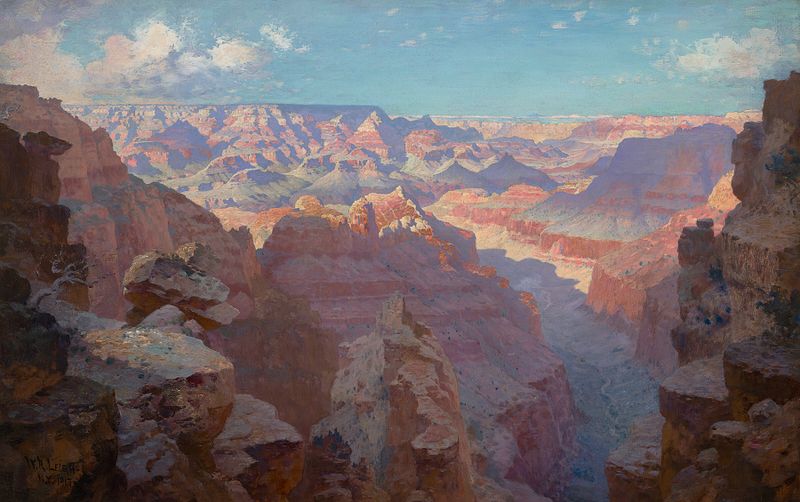
View of the Grand Canyon of the Yellowstone — History & Facts
In a world constantly shifting, there lies a profound faith in the permanence of nature’s beauty, captured in the brushstrokes of a master. Focus on the expansive vista laid out before you. The muted yet vibrant hues of the canyon invite your gaze to travel through the layers of ochre, rust, and green. Notice how the light dances across the rocky outcrops, illuminating the depths of the chasm while casting shadows that hint at its vastness.
The sweeping sky overhead, painted with soft blues and wispy clouds, creates a harmony that cradles the rugged landscape, inviting you to linger in its serenity. Look closely, and you’ll find the delicate balance between majesty and fragility. The juxtaposition of the towering cliffs against the winding river below speaks to both the permanence of the earth and the transience of life. Each stroke reveals a moment frozen in time, a reminder that faith in nature's grandeur can anchor us amidst our fleeting existence.
The subtle interplay of light and shadow evokes a quiet reverence, as if the landscape itself holds secrets waiting to be uncovered. In 1913, William Robinson Leigh painted this masterpiece while living in the United States, a period marked by burgeoning interest in the American landscape. The early 20th century was a time of exploration and reflection in art, with a growing appreciation for the natural world. As he captured the essence of the Grand Canyon of the Yellowstone, Leigh was not only documenting a place but also expressing a broader faith in the enduring power of nature.