Grazing at the Vordense Beek — History & Facts
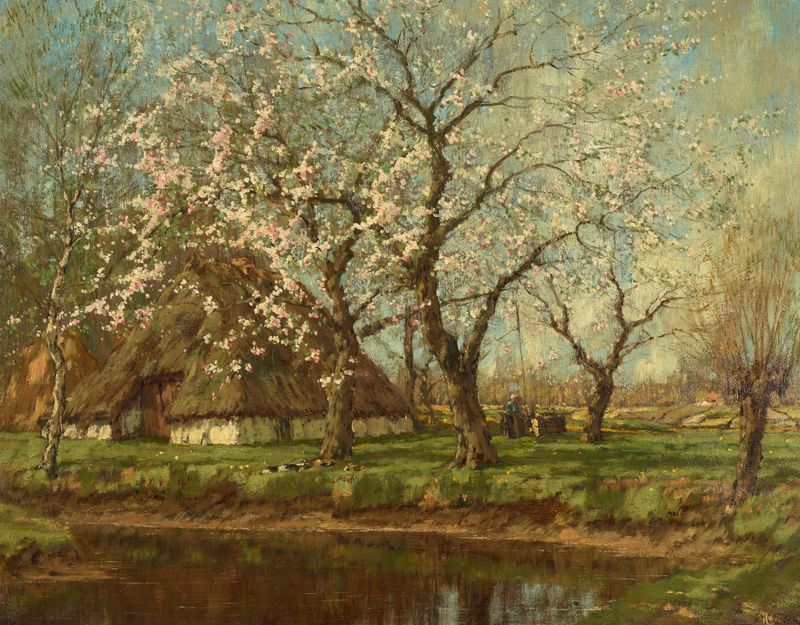
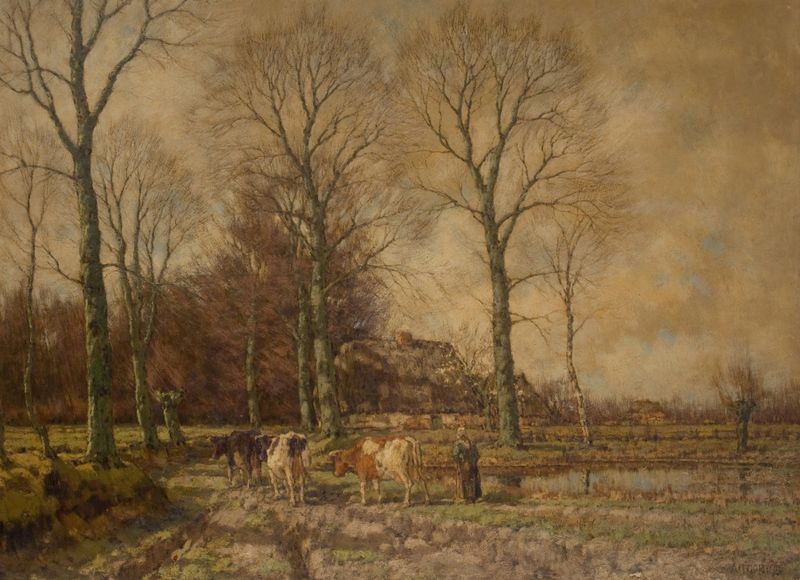
Could a single brushstroke hold eternity? In the vibrant expanse of Grazing at the Vordense Beek, the answer lies within the ecstatic movement of color and form, inviting the viewer to lose themselves in the rhythm of nature. Look to the left at the lively swirl of greens and yellows that create a lush meadow, a sanctuary for the grazing figures. Notice how the artist’s deft application of light reveals the gentle curves of the livestock, each brushstroke capturing their serene presence as they merge into the landscape. The horizon, painted in soft blues and delicate whites, contrasts vividly with the earth tones, inviting your gaze upward, as if contemplating the infinite sky above. Delve deeper into the subtle interplay of light and shadow that breathes life into this pastoral scene.
The grazing animals, though seemingly passive, evoke a sense of communion with the land, reminding us of the profound connection between existence and nature. The soft gradients of color not only capture a moment in time but also suggest an emotional landscape of tranquility, reverence, and the ecstatic joy found in simple pleasures. In the late 19th century, when this piece was created, the artist was immersed in the Dutch landscape tradition, a time when many sought to convey the beauty of rural life in response to the rapid industrialization around them. Working amidst a burgeoning artistic community, Marc Gorter found inspiration in the tranquil rhythms of nature, reflecting a universal yearning for harmony and connection that resonates through his work.