
Große Moorlandschaft — History & Facts
In the expansive realms of nature, desire tugs at the heart, yearning for connection and understanding. It beckons us to traverse the vivid landscapes that echo our innermost sentiments and dreams. Look to the left at the vibrant greens and browns that merge seamlessly in a lush tapestry of life. Notice how the gentle strokes of the brush create a sense of movement, as if the wind breathes through the foliage.
The interplay of light and shadow dances across the marshes, revealing glimmers of water that reflect the soft hues of a sunset. This careful composition invites the viewer to explore every nook, drawing us into the serenity of the landscape. Delve deeper, and you’ll find the contrast between the vibrant foreground and the hazy horizon. The stillness of the water hints at reflective moments, while the distant trees stand like sentinels, guardians of the mysteries that lie beyond.
Each element contributes to an emotional landscape of longing, where nature speaks the unsaid desires of the soul—an invitation to contemplate the fragile balance between tranquility and yearning. Eugen Jettel painted Große Moorlandschaft in 1879, during a period of significant change in the Austrian art scene. As a member of the Vienna Secession movement, he sought to break from traditional representation, embracing a more expressive approach to landscape painting. His focus on the natural world reflected a desire to connect with both the beauty of the environment and the emotional states it evokes, a theme that resonates deeply in this work.
More Artworks by Eugen Jettel
Browse all →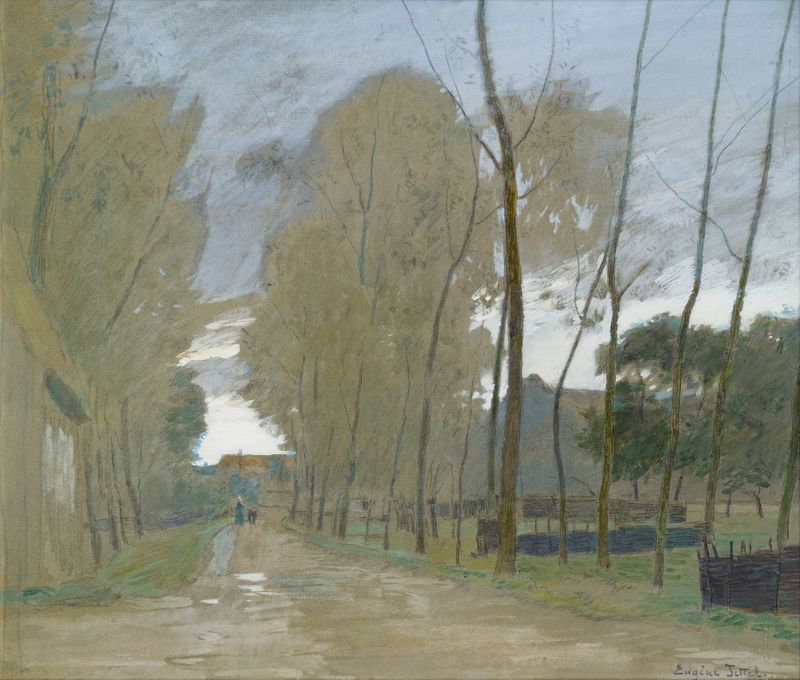
Motiv aus der Bretagne
Eugen Jettel
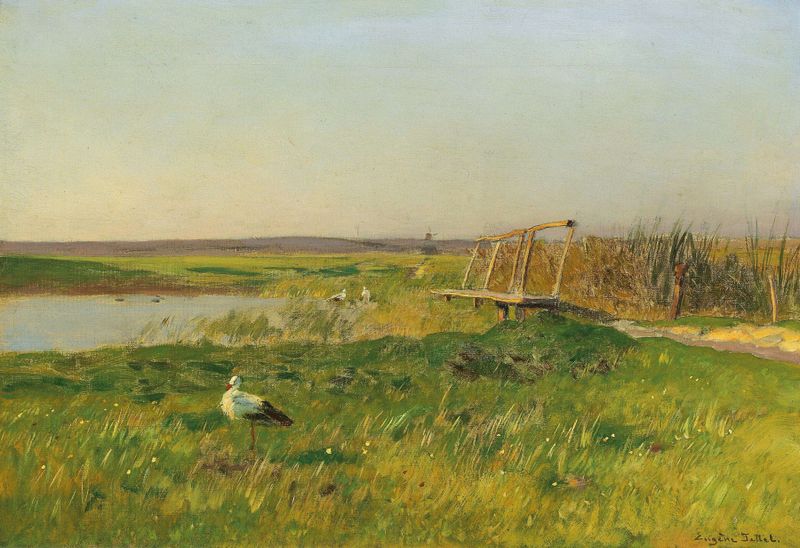
Frühlingslandschaft mit Störchen an einem Weiher
Eugen Jettel

Rinder auf Sommerwiese
Eugen Jettel
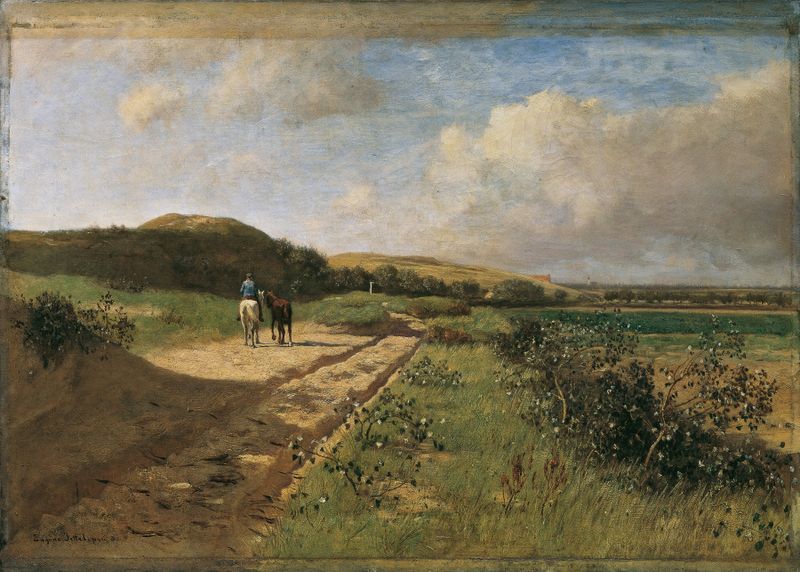
Dünen bei Katwijk
Eugen Jettel
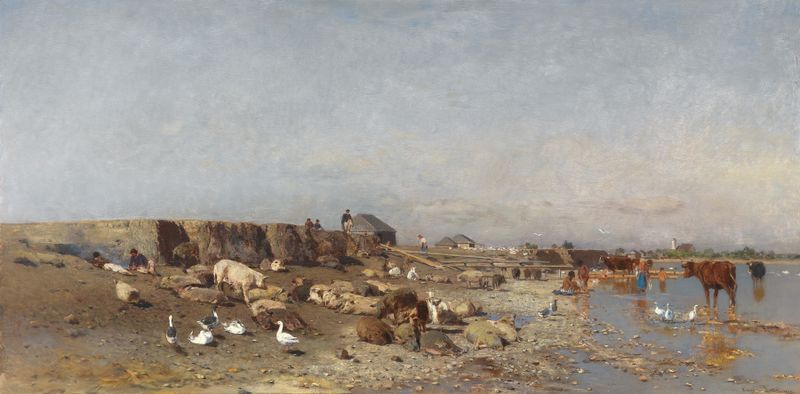
Motiv aus Szered an der Waag
Eugen Jettel
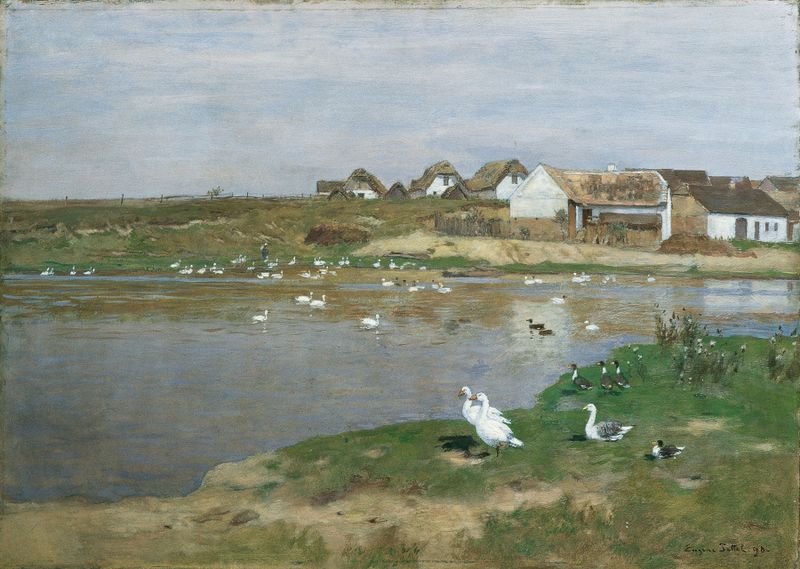
Der Gänseteich in Kotting-Neusiedl
Eugen Jettel

Flusslandschaft Mit Boot
Eugen Jettel

Flusslandschaft mit Kühen
Eugen Jettel

Dorfpartie Strohhütten aus Staatz
Eugen Jettel

Abendlandschaft
Eugen Jettel





