
Güterbahnhof, Baumgarten vor Güterbahnhof — History & Facts
Could beauty survive in a century of chaos? In Güterbahnhof, Baumgarten vor Güterbahnhof, the artist invites us into a world where the ordinary melds with the extraordinary, challenging our perceptions of reality. Look to the left at the imposing train station, its sharp lines intersecting with the soft curves of nature beyond. The juxtaposition of urban and rural reveals a tension between the bustling life and the serene landscape. Notice how the muted palette of grays and greens creates a sense of melancholy, while subtle hints of light play across the scene, suggesting a fleeting moment captured in time. In this painting, the train station stands as a metaphor for transition and movement within a society grappling with modernity.
The trees, positioned in the foreground, symbolize nature’s resilience in the face of encroaching industrialization, while the shadowy outlines of the trains hint at mankind's relentless pursuit of progress. This interplay between the structured and the organic fosters an emotional complexity, prompting the viewer to consider what might be sacrificed for the sake of advancement. Created in 1927, during a time of significant change in Europe, the work reflects Paul Kleinschmidt's response to a rapidly evolving landscape. As a member of the Berlin Secession, he was immersed in the avant-garde movements of the time, seeking to explore the relationship between humanity and its environment.
His career was marked by a desire to capture the tensions of his era, revealing the delicate balance between chaos and beauty that defines modern life.
More Artworks by Paul Kleinschmidt
Browse all →
Spätnachmittag (Haus im Olivenhain)
Paul Kleinschmidt
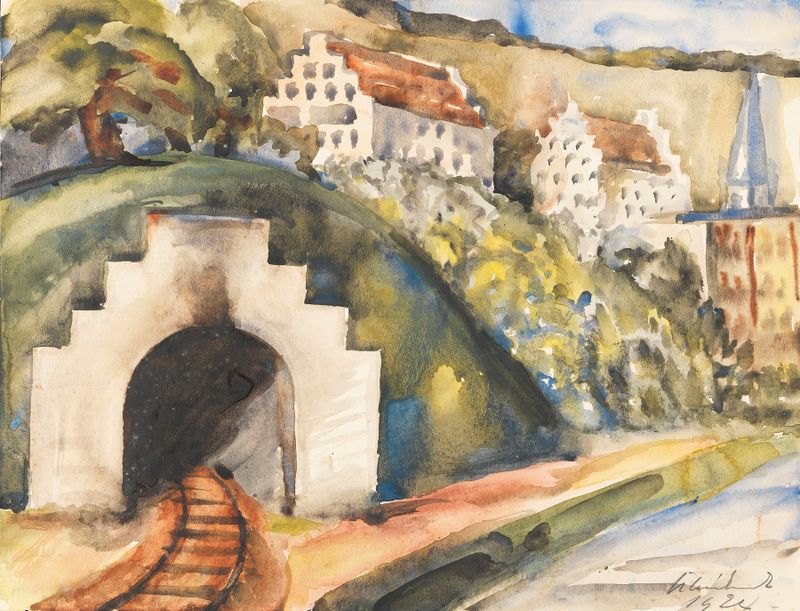
Tunnel bei Wasserburg am Inn
Paul Kleinschmidt

Landschaft vor Sturm
Paul Kleinschmidt
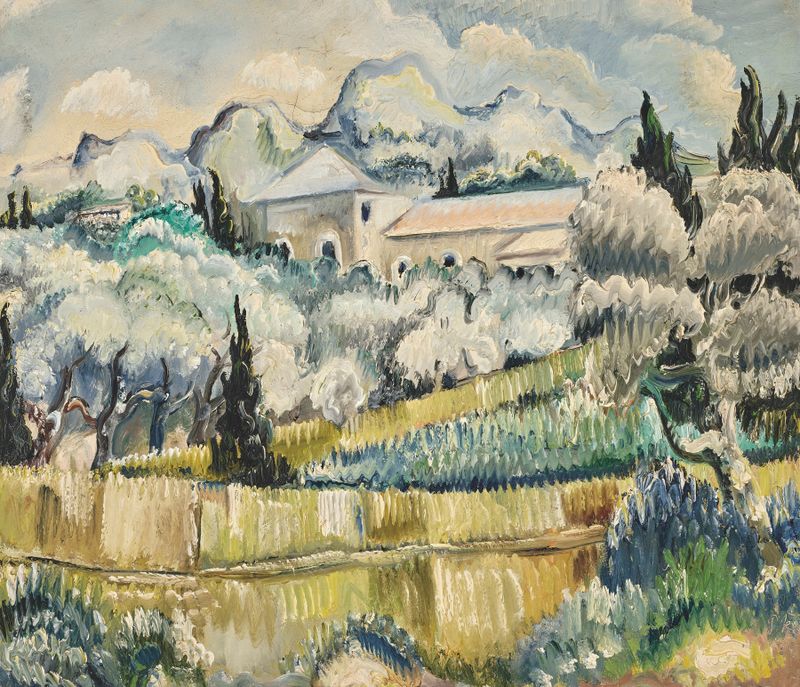
Landschaft in Südfrankreich
Paul Kleinschmidt
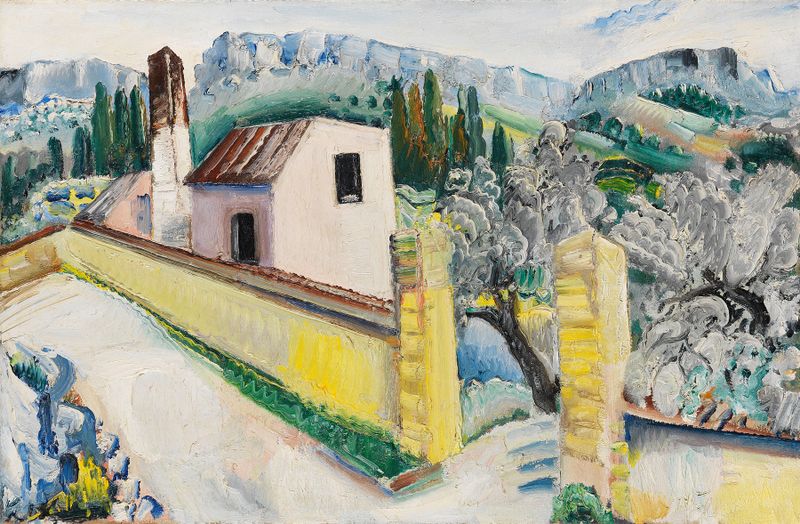
Landschaft bei Cassis
Paul Kleinschmidt

Unterführung in Ulm
Paul Kleinschmidt

Südfranzösische Landschaft mit Bäumen
Paul Kleinschmidt
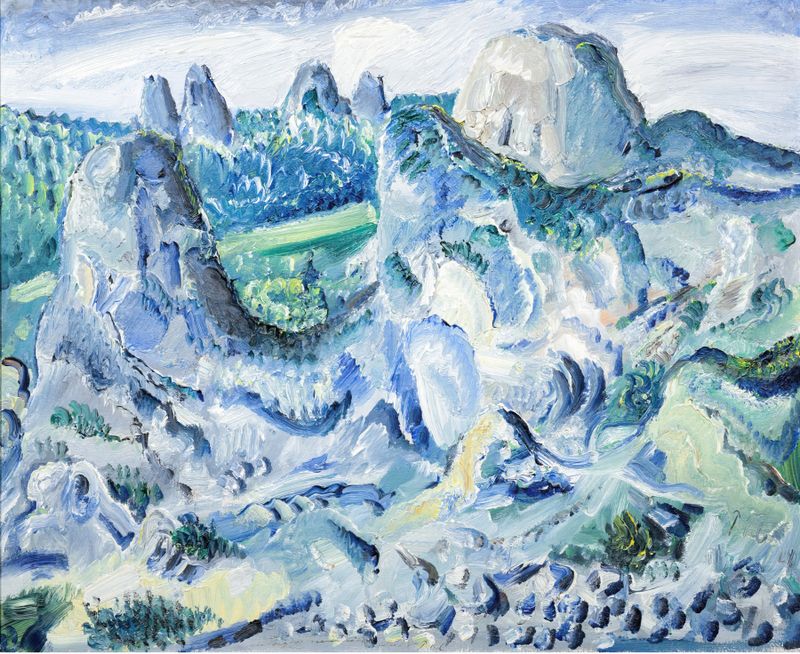
Landschaft mit Felsen – Felsen bei Blaubeuren
Paul Kleinschmidt
New York Riverside Drive
Paul Kleinschmidt
Alblandschaft
Paul Kleinschmidt





