
Ægyptisk Tempel — History & Facts
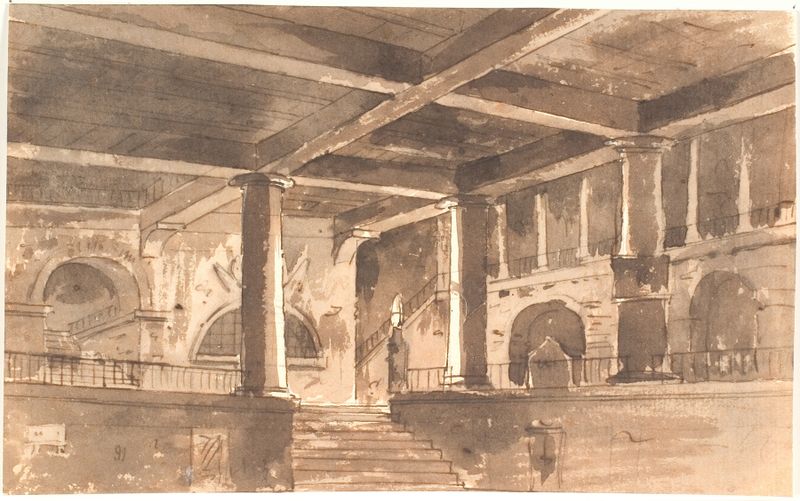
This sentiment resonates deeply within the realms of decay, where what once thrived is transformed into haunting beauty. The juxtaposition of life and deterioration captivates the viewer, inviting a meditation on the passage of time and the remnants of civilization. Look to the left at the intricate carvings that adorn the temple façade, delicate yet crumbling under the weight of years. The muted earth tones of ochre and sienna echo the whispers of ancient stories, while the strategic interplay of light and shadow creates a sense of depth, emphasizing the temple’s grandeur and its inevitable decline.
The brushstrokes are both meticulous and expressive, capturing the textured surfaces that speak to the history embedded in stone. As you gaze deeper, consider the contrasts at play: the rigidity of the architecture versus the softness of the surrounding vegetation that pushes through the cracks, claiming its space. The fading brilliance of the temple reflects a narrative of lost glory, where each chipped stone tells tales of worship and devotion now shrouded in silence. This moment of decay is paradoxically enlivened by nature's encroachment, symbolizing resilience amid ruin. Aron Wallick created Ægyptisk Tempel between 1778 and 1845, a period marked by the Romantic fascination with the past and the exotic.
While living in France, he was influenced by contemporary movements that celebrated antiquity. His exploration of decay as a theme mirrored the broader artistic discourse of the time, prompting viewers to reflect on the transient nature of beauty and civilization itself.
More Artworks by Aron Wallick
Browse all →


More Architecture Art
Browse all →
The statue of Liberty
Frédéric Auguste Bartholdi

View of Houses in Delft, Known as ‘The Little Street’
Johannes Vermeer

View of Houses in Delft, Known as ‘The Little Street’
Johannes Vermeer

The Cathedral in Rouen. The portal, Grey Weather
Claude Monet

The yellow house
Vincent van Gogh

The Church in Auvers-sur-Oise, View from the Chevet
Vincent van Gogh