
Hall of Science, Chicago Fair — History & Facts
Who listens when art speaks of silence? In an era teetering on the brink of revolution, the powerful absence of sound becomes a profound narrative in Hall of Science. Look to the center of the canvas where a grand structure looms, its architectural lines sharp and inviting. The cool blues and grays of the building contrast with the warm earth tones of the bustling crowd, directing your gaze toward the interplay between man-made ingenuity and human presence. Notice how the light cascades across the façade, revealing intricate details that hint at both optimism and uncertainty about the future.
This juxtaposition of shadows and illumination captures a moment where innovation is celebrated yet tinged with the weight of impending change. Within this scene, the tension between progress and tradition emerges subtly. The spectators, seemingly captivated by the hall’s magnificence, embody society's hope while also reflecting a deep-seated anxiety about what the future holds. The array of faces—some eager, others apprehensive—suggests a collective moment of introspection, where excitement for discovery collides with the yearning for stability.
In this way, art becomes a mirror, reflecting our silent fears and aspirations. Charles L. Morgan created Hall of Science during the 1933 Chicago World’s Fair, a pivotal event that showcased the latest advancements in technology and culture. In the backdrop of the Great Depression, this painting served as both a celebration of human achievement and a contemplation of societal change.
Morgan, an architect by trade, captured the spirit of a time eager for renewal while simultaneously grappling with the fragility of progress amidst economic turmoil.
More Artworks by Charles L. Morgan
Browse all →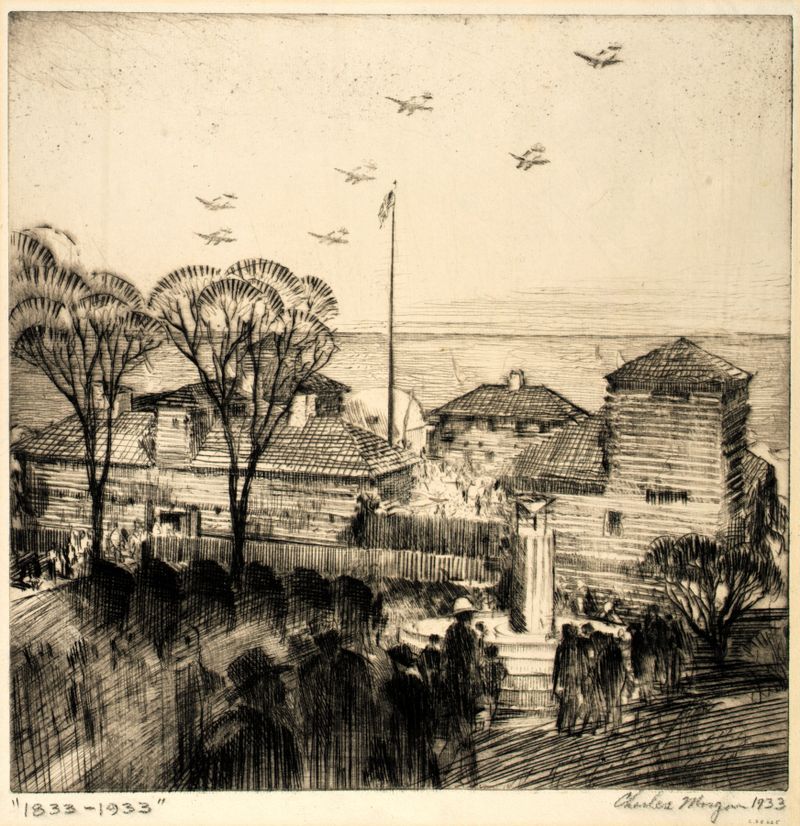
More Architecture Art
Browse all →
The statue of Liberty
Frédéric Auguste Bartholdi

View of Houses in Delft, Known as ‘The Little Street’
Johannes Vermeer

View of Houses in Delft, Known as ‘The Little Street’
Johannes Vermeer

The Cathedral in Rouen. The portal, Grey Weather
Claude Monet

The yellow house
Vincent van Gogh

The Church in Auvers-sur-Oise, View from the Chevet
Vincent van Gogh