Hammershus in the moonlight — History & Facts
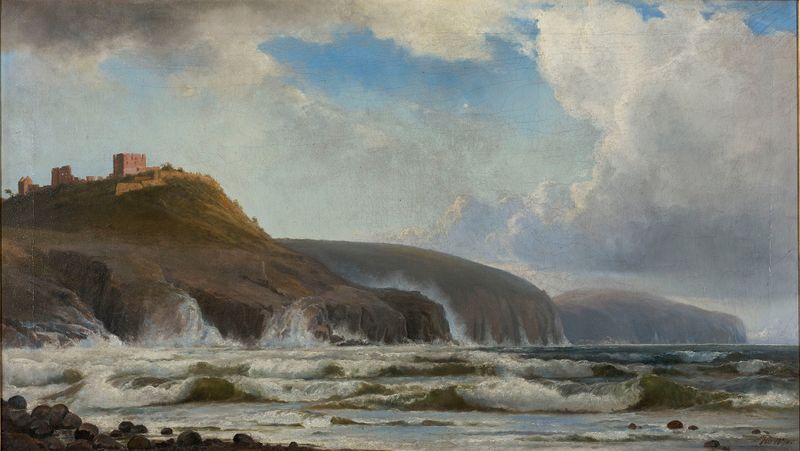
What if silence could speak through light? In Hammershus in the Moonlight, a breathtaking tranquility envelops the ancient ruins, where shadows meld and transform in the soft embrace of the night. Look to the luminous moon, casting its ethereal glow over the rugged stones of Hammershus. Notice how the silvery light dances across the craggy surfaces, highlighting the texture of each weathered stone, while the surrounding landscape fades into an inky darkness. The carefully balanced composition draws the viewer’s eye toward the castle ruins, inviting an exploration of their mystique and history, while the palette of cool blues and muted grays evokes a haunting serenity. As the viewer takes in the scene, the interplay between the light and shadow reveals a deeper narrative of decay and resilience.
The ruins stand as a testament to time’s passage, evoking reflections on the nature of memory and the transformation inherent in stillness. The moon’s gentle brilliance suggests a moment frozen in time, where past and present intertwine, illuminating both the beauty of what remains and the whispers of what has been lost. Holger Drachmann painted this scene in 1870, a period when he was deeply influenced by his surroundings in Denmark. The burgeoning symbolist movement was taking shape around him, as artists sought to communicate emotional experiences and abstract ideas through their work.
During this time, Drachmann faced personal challenges that shaped his artistic vision, ultimately leading to a profound exploration of the interplay between light, silence, and the evocative power of nature.