The coast south of Hammershus — History & Facts
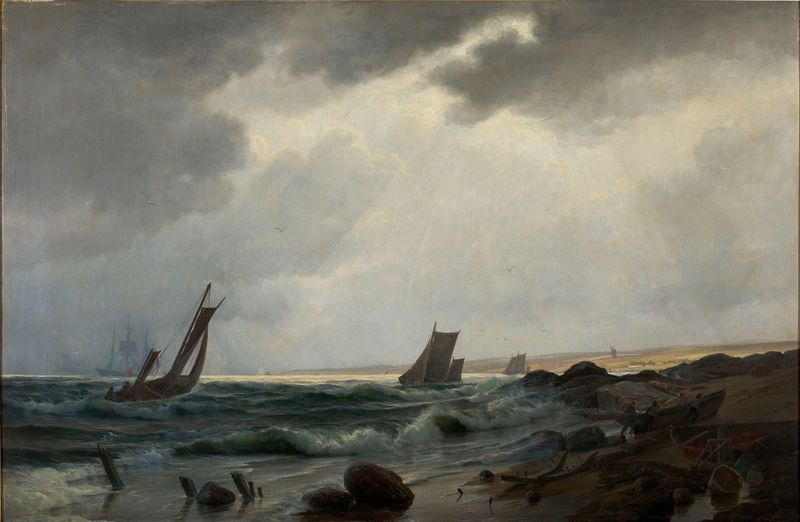
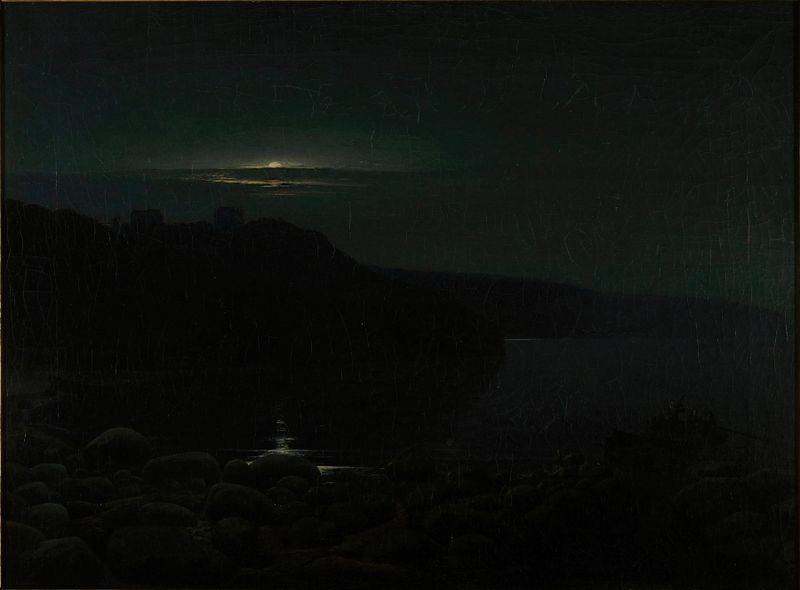
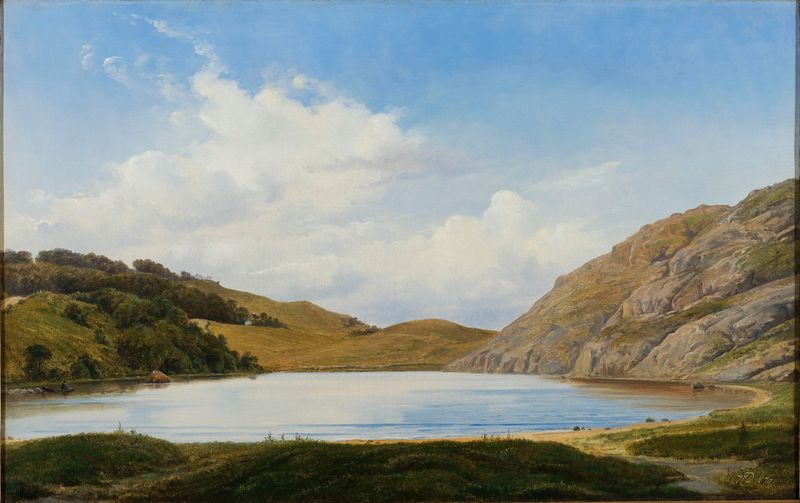
When did color learn to lie? In The coast south of Hammershus, a vibrant tapestry unfolds, where movement dances between reality and illusion, urging us to question what we perceive. This artwork captures the essence of the fleeting moment, a reminder that nature is both beautiful and deceptive. Look to the left at the rugged cliffs that rise dramatically against the horizon, crowned with lush greenery that seems to sway in the gentle breeze. Notice how the artist employs a palette of deep blues and soft pastels, creating a harmonious balance that draws the eye toward the horizon where sky meets sea.
The brushstrokes are fluid and dynamic, lending a sense of motion to the clouds, while the glistening waves reflect a spectrum of light, suggesting a vibrant life just beneath the surface. Delve deeper into the details: the interplay between shadow and light reveals the tension of this coastal scene, as darker shades hint at the unknown depths of the ocean, contrasting with the bright warmth of the sun-drenched cliff tops. This duality encapsulates the essence of movement—both the physical ebb and flow of the tide and the emotional currents tugging at the viewer’s heart. The rhythm of the landscape suggests not just a moment frozen in time, but a continuous, breathing entity that invites exploration. In 1870, the artist painted this piece during a period of personal exploration and artistic transition.
Living in Denmark, he was immersed in the growing Romantic movement, which celebrated nature's majesty and humanity's connection to it. Drachmann was at a pivotal juncture in his life, grappling with both artistic identity and the broader shifts in European art, where traditional boundaries were beginning to blur, allowing for new interpretations of beauty and truth.