Hare-hunt in a Beech Forest — History & Facts
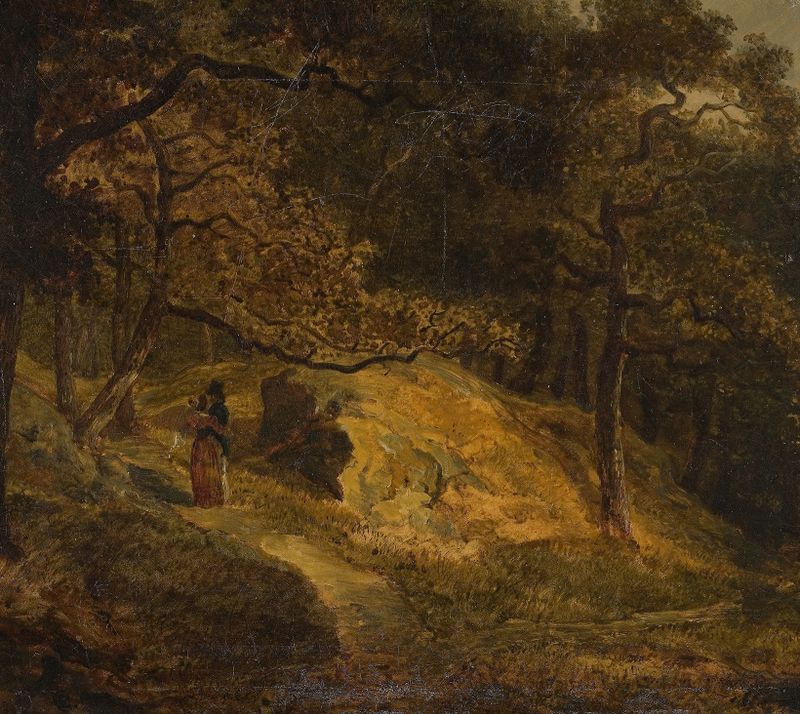
In the delicate balance between nature and fate, this artwork captures the unyielding pull of destiny amid the quiet of the forest. Look to the left at the figure of the hunter, poised with bow drawn taut. The dappled sunlight filters through the beech leaves overhead, casting a mosaic of shadows on the forest floor that dance in rhythm with the tension of the moment. Notice how the earth tones of the trees contrast with the hunter's vivid attire, emphasizing the urgency of his pursuit.
Ezdorf’s brushstrokes breathe life into the duality of peace and tension, inviting the viewer to become an unseen spectator in this world. The scene reveals deeper layers: the hunter represents humanity’s relentless chase of the elusive, while the serene forest embodies nature's indifferent flow. Each detail—the rustling leaves, the focused gaze of the hunter, and the quiet stirrings of unseen creatures—speaks to the interconnectedness of hunter and hunted. There’s a palpable tension between the inevitability of destiny and the fleeting essence of life, captured in fleeting expressions and the lush backdrop of the forest. Created in 1826, when Ezdorf was part of the burgeoning Romantic movement, Hare-hunt in a Beech Forest reflects both personal and societal shifts.
This was a time when artists sought to express emotional depth in their work, responding to the tumult of revolutions and the rise of industrialization. Ezdorf's exploration of nature and human endeavor embodies the era's quest for meaning and connection in a rapidly changing world.