Hauling the Net — History & Facts
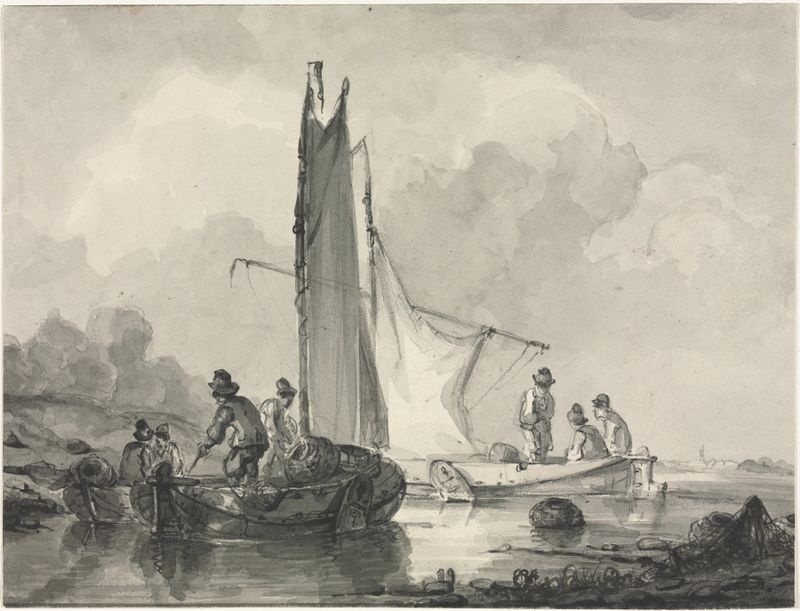
Where does light end, and longing begin? It is in this delicate interplay that we find the heart of Hauling the Net, a work that captures the essence of human endeavor and the weight of destiny. Look to the center of the canvas, where a group of fishermen laboriously pulls a heavy net from the water. The physical strain is palpable, their taut muscles rendered with expert detail, illuminated by the soft, golden light of dawn. Notice how the shimmering reflections dance upon the water’s surface, contrasting with the muted earth tones of the men’s clothing, capturing both the beauty and brutality of coastal life.
This tension between light and shadow highlights the fierce determination written on their faces. Amidst the struggle, a sense of camaraderie emerges, underscored by the silent connection between the figures. Each man is locked in a shared purpose, symbolizing a universal quest for sustenance and meaning. A solitary seagull, perched above, seems to watch over them, representing freedom and the ever-present hope that accompanies hard labor.
This juxtaposition of toil against the backdrop of an infinite sky evokes a deeper contemplation of fate — the unyielding pull of nature and the weight of expectation that shadows human ambition. In 1851, during a period marked by industrial expansion and social change in Europe, Albertus Van Beest painted this work in the Netherlands. The fishing industry was a vital part of life, and artists of this time often celebrated the labor of common men, reflecting a growing awareness of social issues. This piece not only showcases Van Beest's technical prowess but also serves as a testament to the timeless struggle between humanity and the vastness of existence.