Hauteville House — History & Facts
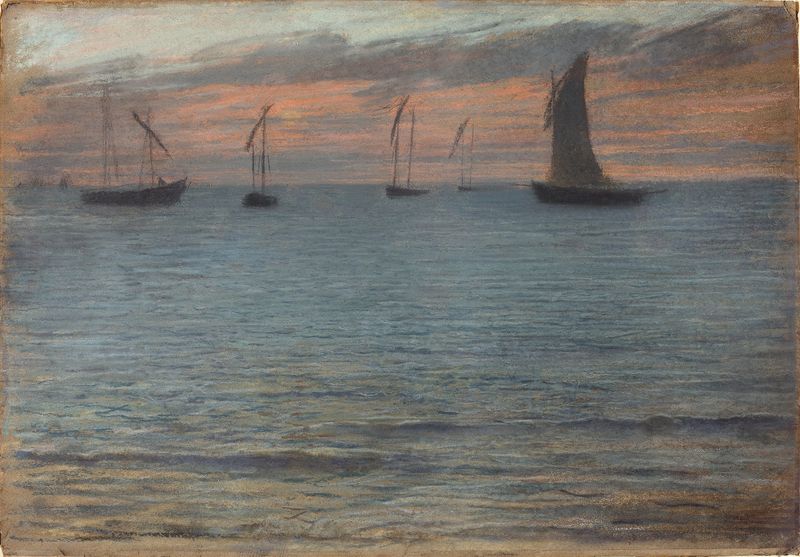
Could beauty survive in a century of chaos? In Hauteville House, the answer emerges through the interplay of light and shadow, where the remnants of grandeur whisper stories of decay and resilience. Look to the left at the delicate interplay of fading frescoes that cling to the walls, each brushstroke a testament to the passage of time. The soft hues of ochre and azure invite the eye upward, where gentle light filters through shattered windows, casting intricate patterns on the floor. This contrast of vibrant history against a backdrop of deterioration evokes a poignant sense of nostalgia, as the artist masterfully captures the essence of forgotten elegance. In the foreground, the scattered debris speaks volumes about abandonment, yet there is a haunting beauty in its disarray.
The broken furniture and peeling paint symbolize not just the physical decay but also the fragility of memory. There is a tension between the remnants of life once lived and the silence that now reigns, suggesting a dialogue between the past and present, where every cracked surface reveals layers of stories and emotions. Ernest-Ange Duez painted this work in 1890, during a time of significant transition in Paris and the broader artistic landscape. As the city experienced rapid modernization, Duez sought to capture the beauty of spaces that held echoes of earlier times.
His focus on the interplay between light and decay reflects both personal struggles and broader societal changes, illustrating the artist's commitment to portraying moments that balance between loss and the remnants of beauty.