Havengezicht — History & Facts
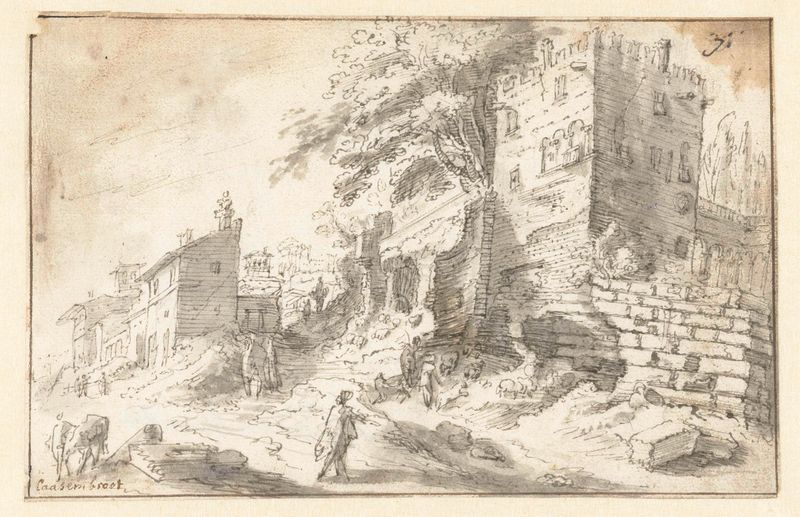
What secret hides in the quiet of the canvas? In Havengezicht, an illusion of time frozen invites contemplation, urging the viewer to ponder the destinies woven into its serene landscape. Look to the left at the gentle curve of the river, its waters mirroring soft hues of blue and gold. The artist’s meticulous brushwork creates a seamless flow, leading the eye toward the distant horizon where land meets sky. Notice how the light filters through the scattered clouds, casting a warm glow on the lush greenery and the rustic structures dotted along the banks.
An air of tranquility pervades the scene, yet beneath the surface, there lies an undeniable tension, suggesting stories waiting to unfold. In this composition, contrasts emerge—not just between the bright, illuminated areas and the shadowy depths, but also in the dichotomy of nature’s calm and human existence. The boats, poised gently on the water’s edge, symbolize both exploration and inevitable mortality, hinting at journeys yet taken. The figures, small in scale, evoke a feeling of insignificance against the grand backdrop of nature, suggesting that while destiny may be laid out before them, it remains ever elusive. Abraham Casembroot painted Havengezicht between 1650 and 1675, a time when Dutch art was flourishing with a focus on landscape and still life.
Living in a period marked by both prosperity and the aftermath of the Thirty Years' War, he found inspiration in the peaceful scenes of his homeland. This painting reflects not only the beauty of the Dutch landscape but also a deeper philosophical inquiry into the nature of existence and the paths we take.