Hay and Log Barges on the Conway — History & Facts
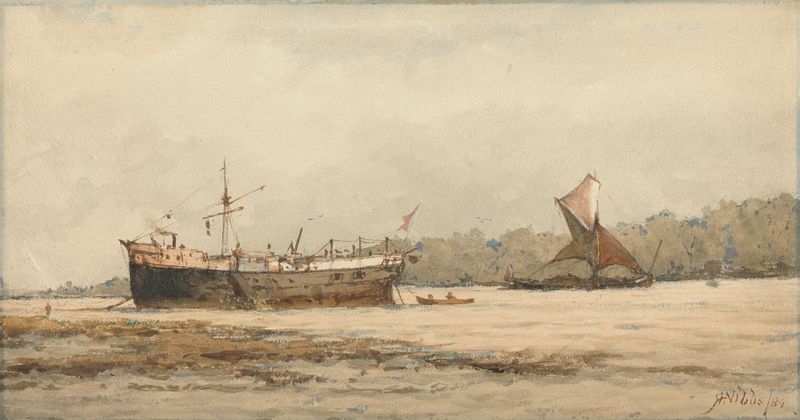
In the stillness of a moment, nature intertwines with human endeavor, revealing a unique kind of ecstasy that transcends time and space. The juxtaposition of vibrant life against the stillness of the river invites reflection on the beauty of labor and the harmony found within it. Look to the left where the hay-covered barges rest gently on the water’s surface, their earthy tones blending seamlessly with the surrounding landscape. The artist's brush delicately captures the dappled light filtering through the lush greenery, creating a warm glow that envelops the scene.
Notice how the soft strokes of green and gold evoke an intimate connection with nature, while the reflections shimmer like fragmented memories on the river's surface, inviting the viewer to ponder the passage of time. Delve deeper into the interplay of color and form; the barges signify the human touch upon the land, yet they also integrate harmoniously with the river, illustrating a balance between industry and the serenity of nature. The gentle ripples in the water hint at a breeze, symbolizing the fleeting moments of joy that come from labor—a reminder that our industrious pursuits can yield profound beauty and satisfaction. This tension between movement and stillness encapsulates a fleeting ecstasy that the viewer is invited to feel. During the period when this piece was created, Richard Henry Nibbs was exploring the themes of rural life and landscape in Britain.
Working amidst the late 19th to early 20th century, he was influenced by the rise of Impressionism, yet sought to capture the essence of everyday scenes. The world was shifting rapidly, and his focus on the pastoral life reflected a yearning for connection to the land amid the industrial changes occurring around him.