Greenwich Hospital — History & Facts
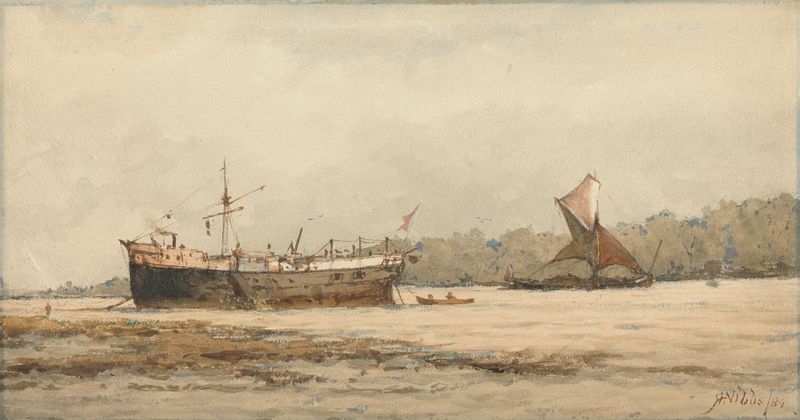
Can paint confess what words never could? In Richard Henry Nibbs’ Greenwich Hospital, the canvas becomes a portal to a world where ecstasy and sorrow intertwine, revealing emotions that linger just beyond language. Focus on the ethereal light that spills into the serene interior, illuminating the weathered faces of the figures. Look to the left, where silhouettes of individuals seated in contemplation seem suspended between past and present, their expressions a poignant testament to unspoken stories. The soft, muted palette invites viewers to linger, while the delicate brushwork captures the nuances of human experience, making the moment feel both intimate and universal. As you explore further, consider the contrasting emotions swirling within the scene.
The tranquility of the hospital juxtaposes with the weight of each figure's burden, suggesting a shared struggle amidst their quietude. The emptiness of the space around them amplifies their isolation, yet the warm light hints at the possibility of connection—a fleeting moment of understanding. Each brushstroke whispers the joy and pain of existence, revealing the complexity of life within these walls. Richard Henry Nibbs created Greenwich Hospital during a period when he sought to capture the authenticity of human emotion through subtle realism.
Working in the late 19th century, Nibbs was influenced by the broader artistic movements of his time, which aimed to explore the depth of human experience. His focus on such themes was reflective of an era poised between romantic idealism and the more stark realities of life, crafting a narrative that resonates through the ages.