Hay harvest near Dachau — History & Facts
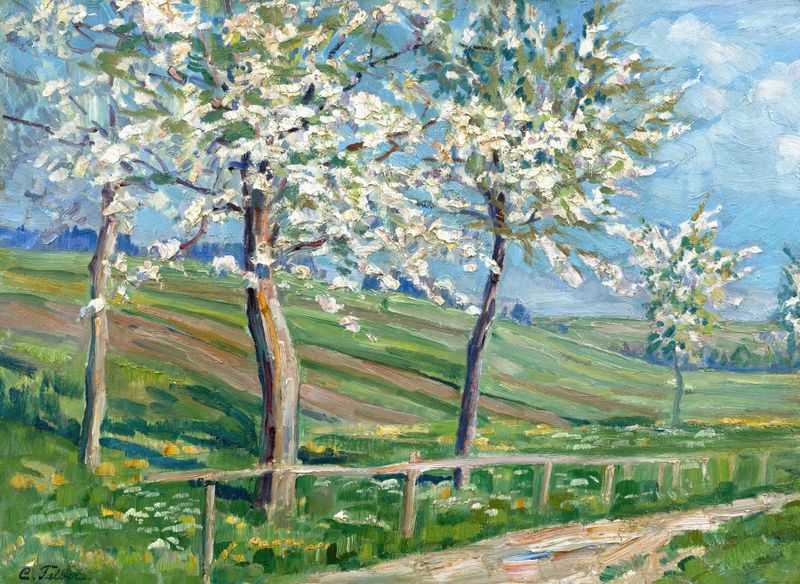
Can beauty exist without sorrow? In the intricate tapestry of life, light and shadow dance together, revealing deeper truths beneath the surface. To truly appreciate this landscape, begin by examining the foreground, where golden haystacks rise like sentinels against the cool expanse of the sky. The artist masterfully employs a palette of earthy tones—rich ochres mingling with deep greens and soft blues—to evoke the warmth of the setting sun as it casts long, gentle shadows across the field. The brushwork, textured yet fluid, draws the viewer’s eye toward the horizon, where sky and earth converge in an embrace of color and light. Beneath its serene exterior, the painting holds layers of meaning.
The cyclical nature of the harvest reflects the rhythm of toil and reward, a reminder of the fleeting beauty of pastoral life. The distant figures working in the field hint at the quiet struggles and labors that underpin this idyllic scene, suggesting that beauty is often accompanied by an unspoken history of sacrifice and resilience. The juxtaposition of the harmonious landscape with the laborers’ toil invokes a tension between serenity and struggle, prompting viewers to reflect on the deeper truths of existence. During the time Hay harvest near Dachau was painted, Carl Friedrich Felber was immersed in the evolving landscape of 19th-century art.
Working in Germany, he was influenced by the Romantic movement's focus on nature and emotion. This period, marked by a shift towards realism and a celebration of everyday life, framed his artistic vision, capturing both the beauty and the complexity of rural existence.