Frühlingslandschaft — History & Facts
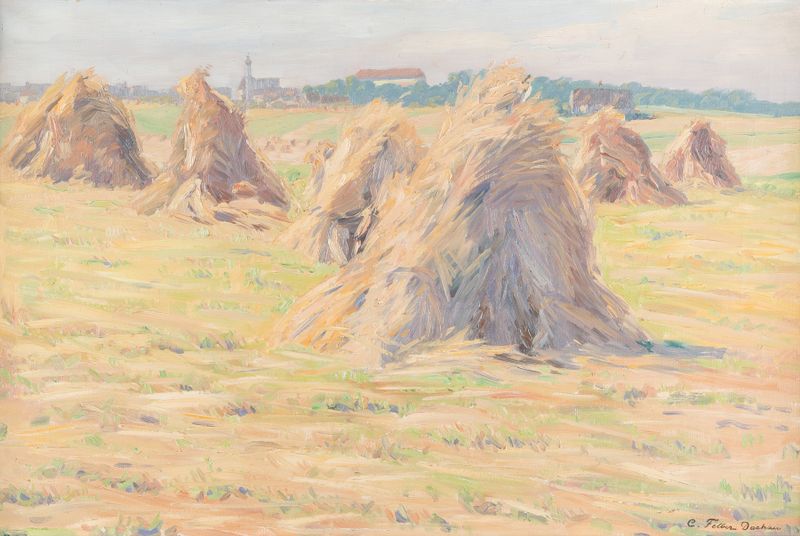
In the tranquil embrace of a spring landscape, nature unfolds its revelatory chaos—a symphony of color and form that invites an introspective journey. The tension between order and disorder creates a profound emotional landscape, where peace masks an undercurrent of wildness. Look to the foreground, where gentle hills undulate under a soft sky, each blade of grass rendered with delicate precision. Notice how the artist employs a palette of vibrant greens and warm yellows, evoking the freshness of spring while suggesting an underlying turbulence.
The light dances through the branches of blossoming trees, casting dappled shadows that play along the path, leading the viewer deeper into this immersive scene. Yet, there lies a deeper complexity beneath this idyllic veneer. The chaotic interplay of light and shadow hints at the uncertainty of renewal, as the vibrant colors contrast against darker undertones intertwined within the foliage. It is a moment caught between fleeting serenity and the inevitable turmoil of nature's cycle, suggesting that beauty and chaos are eternally intertwined. This artwork emerged during a period of artistic exploration and innovation in the mid-19th century.
The artist created it in an era marked by a growing fascination with nature and Romanticism, reflecting a desire to capture the emotional essence of the landscape. Felber, influenced by the German romantic tradition, sought to convey not just the aesthetic beauty but the tumultuous spirit of the world around him, imbuing his work with both hope and the specter of chaos.