Haystacks — History & Facts
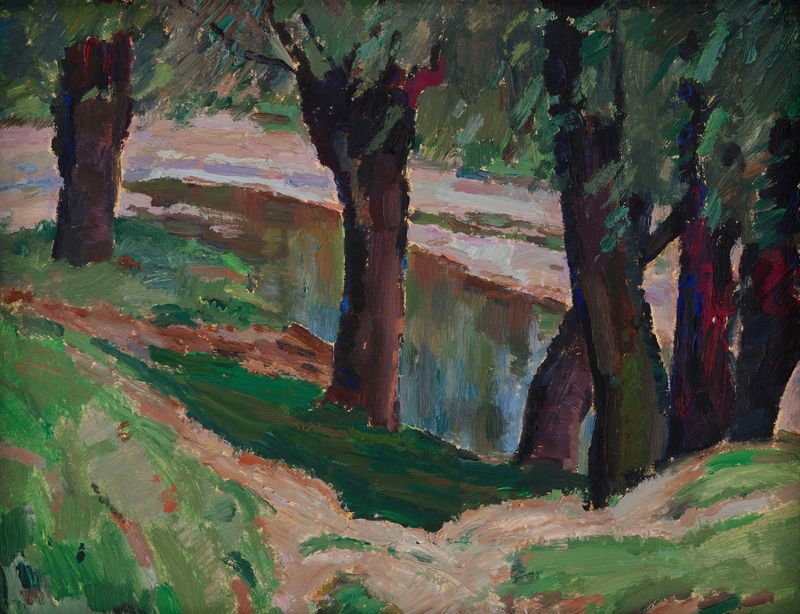
Could a single brushstroke hold eternity? In Haystacks, the weight of solitude hangs palpably in the air, evoking the quiet anguish of existence itself. Look closely at the composition; notice how the haystacks dominate the canvas, their imposing forms rising against the expansive, muted background. Strzemiński’s brushwork is deliberately expressive, with each stroke echoing the texture and volume of the hay, almost inviting you to reach out and feel its roughness. The palette is a blend of ochres and greens, evoking both the harvest and the decay of summer, illuminated by an almost ethereal light that bathes the scene in a melancholic glow. As you study the piece, subtle contrasts emerge—between the solidity of the haystacks and the fragile wisps of grass, between the warm tones of nature and the cool, desolate sky.
This tension speaks of loneliness, not just in the physical absence of figures but in the atmosphere itself, where nature exists in a state of quiet contemplation. The stillness suggests a deeper emotional narrative, where isolation becomes a thread that connects the viewer to the landscape, and ultimately, to their own sense of solitude. Strzemiński painted this work in Limanowa during the mid-20th century, a time when he was deeply invested in exploring the emotional weight of everyday subjects. His experiences as a Polish artist during a turbulent era, marked by the effects of war and social upheaval, influenced his focus on abstraction and form, seeking to convey inner truths through the simplicity of rural life.
In this piece, he transforms haystacks into emblematic witnesses of human experience, resonating with profound loneliness amidst the vastness of nature.