Bulgarian Alley — History & Facts
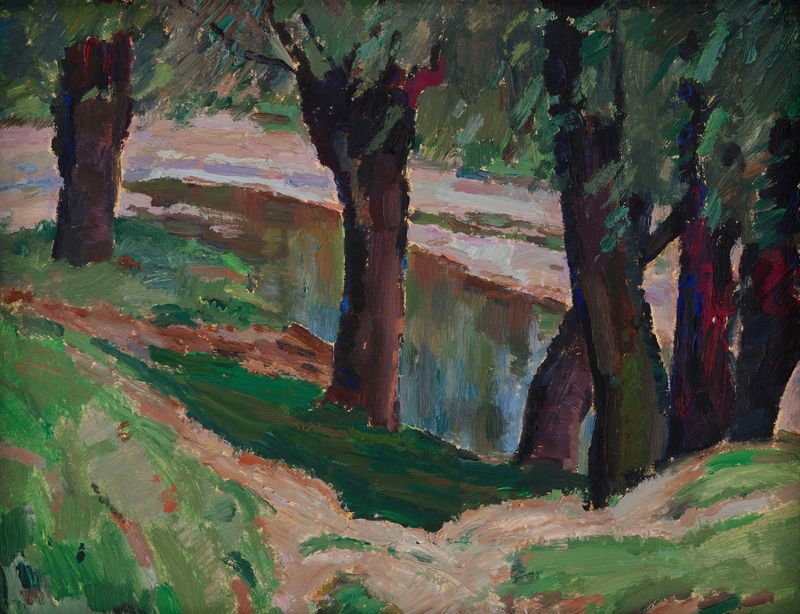
Did the painter know this moment would outlive them? Captured within the frame lies a fleeting beauty, a harmony of colors that speaks to the transience of life and art. Look to the center, where vibrant hues of green and ochre converge, inviting the viewer's gaze deeper into the alleyway. Notice how the light spills gently through the openings, casting soft shadows that dance along the cobblestones, illuminating the contours of everyday life. The composition is both structured and fluid; the careful arrangement of forms draws your eye along the path, evoking a sense of movement and time. As you explore the edges of the scene, subtle contrasts emerge.
The warm tones of the buildings juxtapose the cooler shadows, hinting at the emotional depth beneath surface beauty. The empty streets suggest isolation, yet the play of light breathes life into the stillness, capturing the paradox of solitude amidst urban existence. Each brushstroke seems to linger, echoing the silent stories of those who once walked there, creating a poignant narrative of absence and memory. Kazimierz Strzemiński painted this work in 1930 in Poland, a time of significant change in the world of art, as modernism began to take hold.
Strzemiński was deeply immersed in the avant-garde movement, dedicated to redefining visual language and expression. His exploration of form and color in Bulgarian Alley reflects both his personal artistic philosophy and the broader cultural shifts of his time, merging the beauty of the mundane with a deeper commentary on existence.