Heathland in Spring — History & Facts
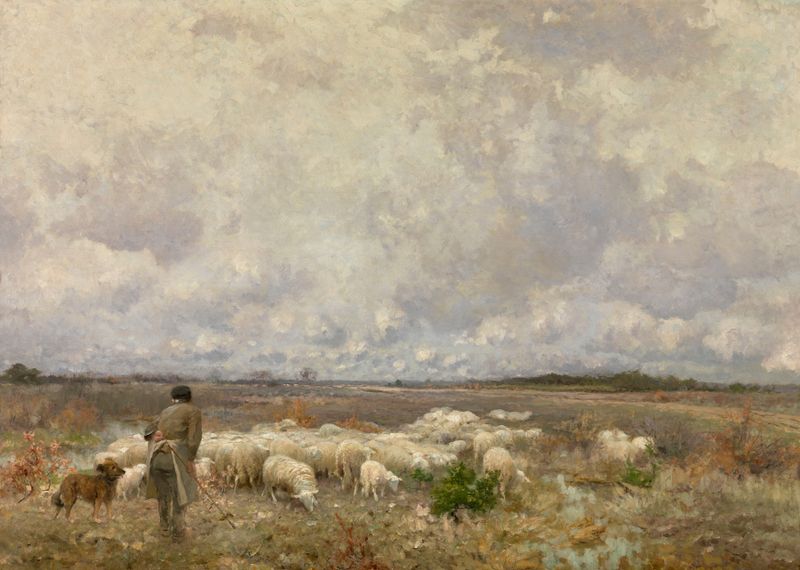
In a fleeting moment, we find ourselves enveloped in a dreamlike landscape, where the ordinary transcends into the extraordinary. Look to the bottom of the canvas, where sprawling green grasses intermingle with vibrant bursts of wildflowers, inviting your gaze to dance across the scene. The colors pulse with life—lush greens contrasted against soft pinks, yellows, and whites—each stroke revealing a masterful touch that breaths vitality into nature’s palette. The gentle curves of the land draw the eye upward, where a sky of pastel blues and delicate whites beckons with its ethereal quality, creating a perfect harmony between earth and air. As you explore further, notice the subtle interplay of light and shadow across the heathland.
The warm glow of sunlight filtering through the clouds evokes a sense of awakening and renewal, hinting at the transient beauty of spring. There’s an underlying tension here too, between the ephemeral nature of the blossoms and the enduring solidity of the earth, suggesting that beauty is both fleeting and eternal, a cycle that nourishes the soul. Florent Crabeels painted this piece during an era marked by a growing fascination with landscape and nature in the late 19th century. Although the exact date remains uncertain, the artist’s work reflects a time when impressionism was gaining momentum, allowing for greater expression of mood and atmosphere.
Crabeels, rooted in the heart of Belgium, captured the essence of his surroundings during a period of emotional and artistic exploration, illustrating both the charm of his native landscape and the universal allure of spring’s embrace.