Winter in the Kempen — History & Facts
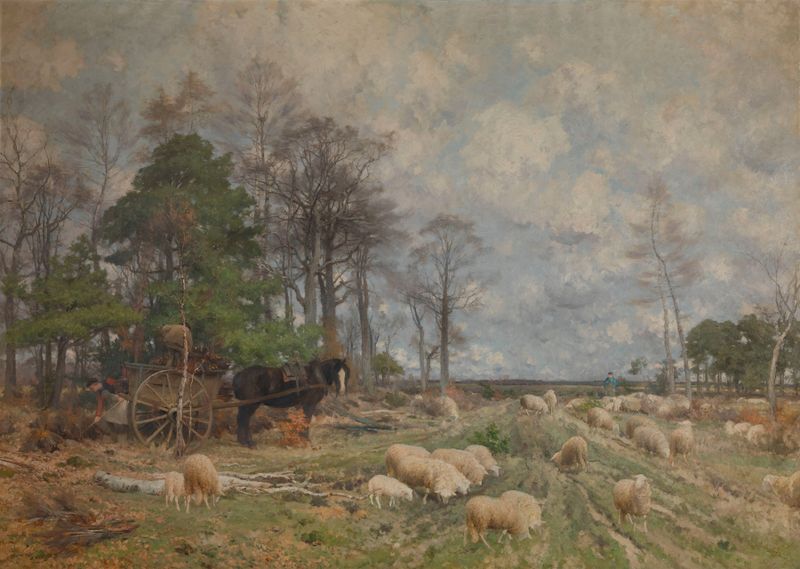
What if silence could speak through light? In the stillness of a winter landscape, the absence of sound becomes a canvas for reflection and solitude. Look to the center of the piece, where a blanket of snow envelops the vast expanse of the Kempen. The white terrain stretches infinitely, punctuated only by the delicate outline of bare trees, their angular branches clawing at a muted sky. Notice how the cool, subdued palette instills a sense of calm, while the soft brushstrokes evoke the gentle fall of snow, blending the horizon into a seamless horizon of white.
The contrast between the bright snow and the dark silhouettes of trees emphasizes the emptiness, inviting contemplation of the space that silence occupies. Beyond the serene surface lies a poignant tension; the stillness speaks of both solitude and introspection. The emptiness of the landscape embodies a haunting beauty, suggesting moments of reflection and the weight of untold stories. Each untouched drift of snow represents an unexpressed thought or feeling, while the trees, standing sentinel, hint at resilience amid a tranquil void.
This delicate balance between absence and presence invites viewers to engage with their own interpretations of silence and emptiness. Created during an undefined period in the artist's career, this work emerges from a time when Crabeels was exploring the relationship between nature and human emotion. The world of art was rapidly evolving, with movements reflecting on psychological depth and the subtleties of color. In this context, Crabeels's exploration of winter landscapes reflects not only personal contemplation but also a broader dialogue with the themes of isolation and introspection in art.