
Heiligenblut — History & Facts
In the quiet embrace of the Austrian Alps, a haunting emptiness lingers in the air, echoing the solitude of the landscape. Focus on the sweeping curves of the mountains, their majestic peaks reaching toward a muted sky. Notice how the cool palette of blues and greys envelops the canvas, creating a stillness that invites contemplation. The small village nestled at the foot of the mountains draws your eye, its quaint buildings almost swallowed by the vastness surrounding them.
Each stroke seems deliberate, as if the artist sought to convey the weight of isolation through the interplay of light and shadow. As you examine the details, a sense of melancholy surfaces. The distant church steeple rises defiantly, a symbol of faith amidst the overwhelming silence of nature. The juxtaposition of human existence against the grandeur of the landscape leads us to ponder our own insignificance.
The composition evokes a dialogue between emptiness and belonging, underscoring the struggle of finding one's place in an endless expanse. In 1868, Ferdinand Lepie painted this piece during a pivotal time in his career, living in Vienna. The Romantic movement was flourishing, and artists were embracing themes of nature's sublime beauty and human vulnerability. This work reflects the era's yearning for connection to the natural world, while also illustrating Lepie's mastery in capturing the profound emotions stirred by the silent, yet powerful, presence of the Alpine landscape.
More Artworks by Ferdinand Lepie
Browse all →
Blick auf Ischl und die Kaiservilla
Ferdinand Lepie

Der Altstädter Ring in Prag
Ferdinand Lepie

View of Naples with Vesuvius in the background
Ferdinand Lepie

A View of Gmunden on Lake Traunsee
Ferdinand Lepie
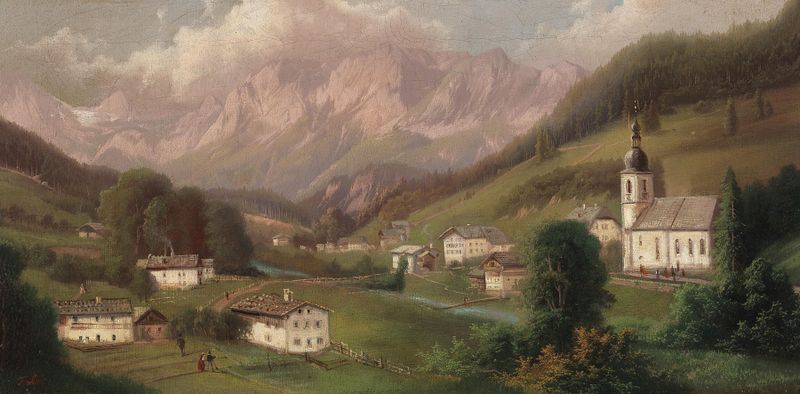
Dorf in den Alpen
Ferdinand Lepie

Venice, View of the Doge’s Palace and St. Mark’s Square
Ferdinand Lepie
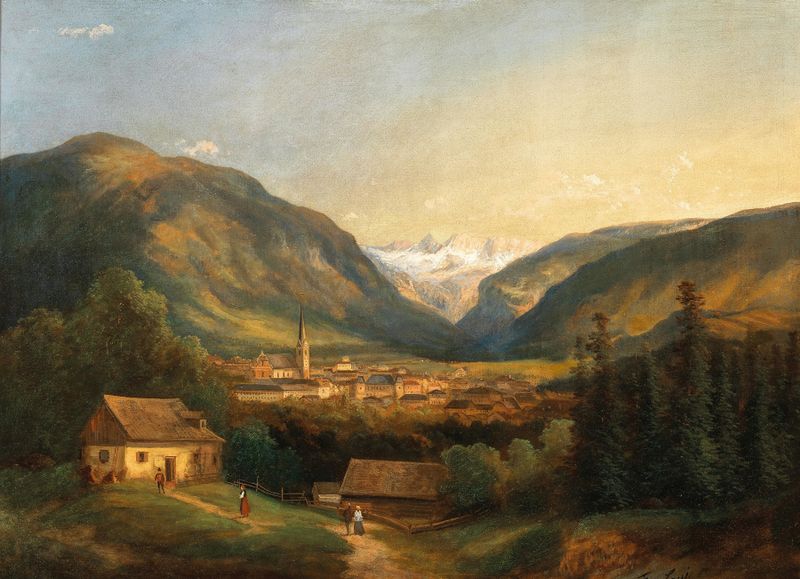
A View of Bad Ischl
Ferdinand Lepie

View of Gmunden and Schloss Ort
Ferdinand Lepie
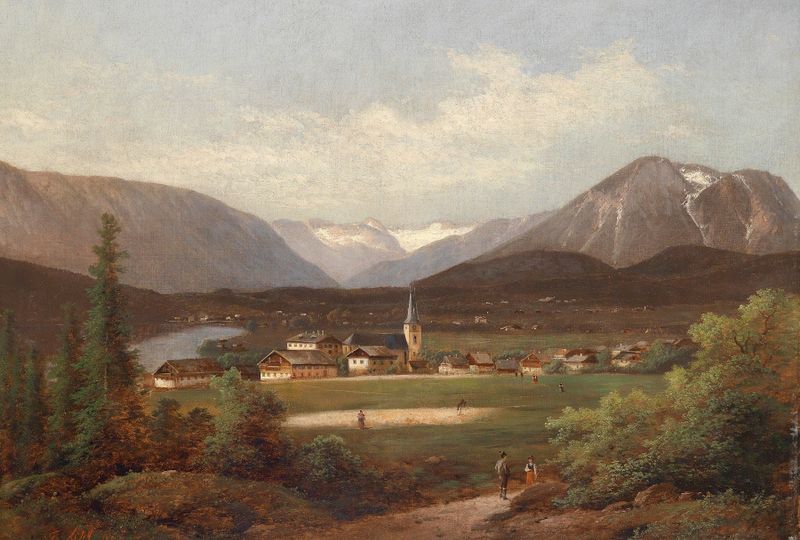
Blick über den Altausseersee
Ferdinand Lepie
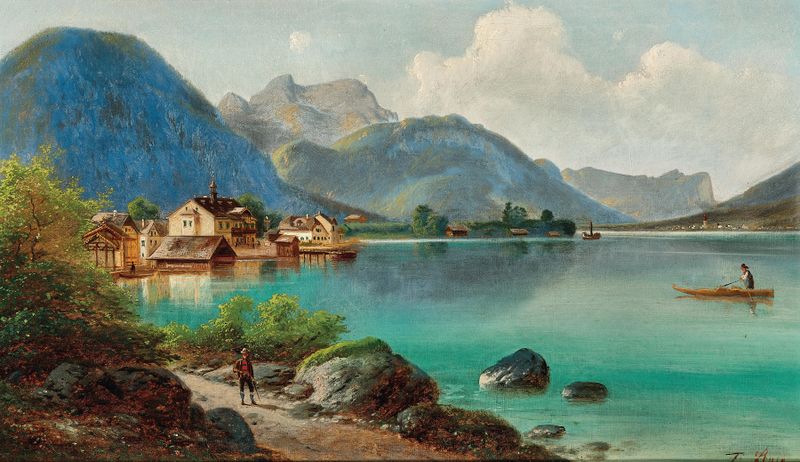
Blick auf Weissenbach am Attersee
Ferdinand Lepie





