Herbstwald — History & Facts
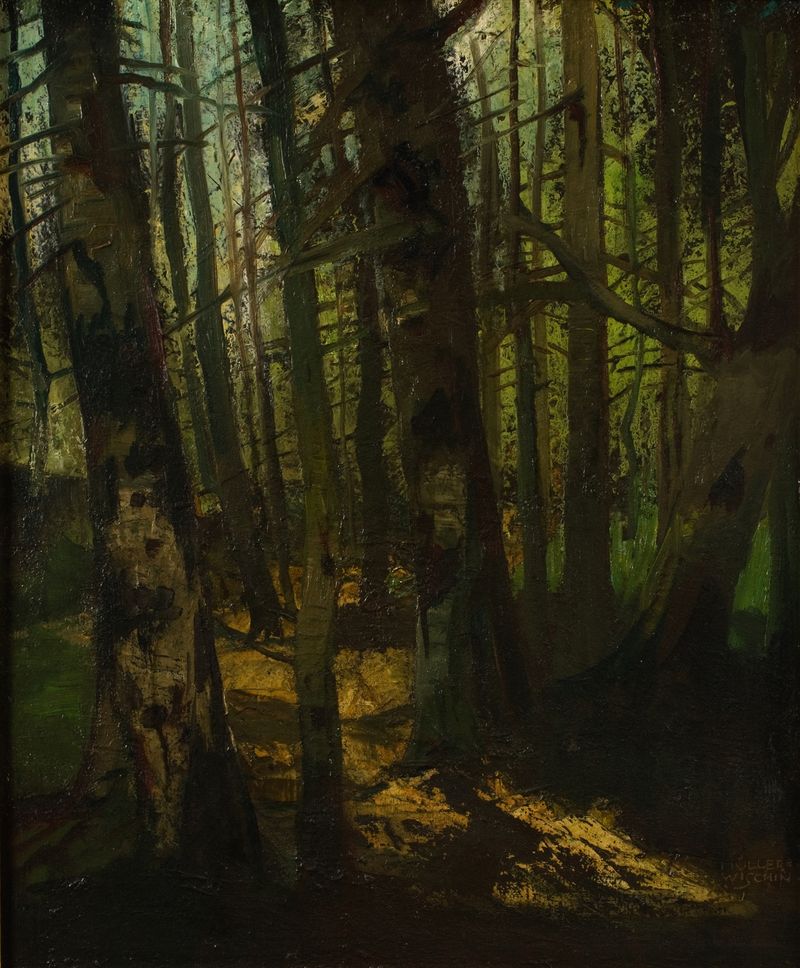
Who listens when art speaks of silence? In the vibrant interplay of colors, a profound legacy unfolds, inviting the viewer to pause and reflect. Focus first on the tapestry of muted greens and rich golden hues that dominate the canvas, creating a lush autumn forest. The delicate brushwork captures the gentle sway of the trees, their leaves lightly trembling, as if whispering secrets to one another. Notice how the light filters through the canopy, casting dappled shadows on the ground, inviting you to step into this tranquil space and breathe in the serene atmosphere. Yet, beneath the surface beauty lies an emotional complexity.
The contrasting warm and cool tones evoke a sense of transition, hinting at the cycles of life and death that define nature. The stillness of the scene speaks to the quiet moments we often overlook, reminding us of the weight of time. Each brushstroke seems to echo with a memory, suggesting a connection to the past while beckoning future generations to carry this legacy forward. Created during an unspecified period, the work reflects a moment in Anton Müller-Wischin's life when he was exploring the intersection of natural beauty and introspective themes.
While specific events surrounding its creation are unknown, the artist was part of a movement that valued emotional resonance in landscape art, emphasizing the relationship between humanity and the natural world during a time of increasing industrialization.