Herd of Animals in a Summer Landscape — History & Facts
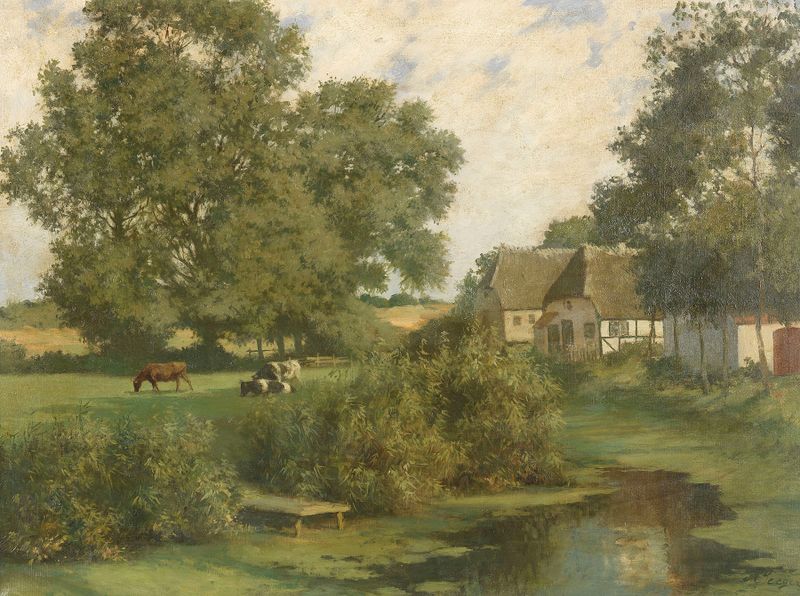
Did the painter know this moment would outlive them? In the serene embrace of nature, time flows differently, suspended within the vibrancy of a summer landscape. Look to the left at the procession of animals gracefully traversing the sun-drenched meadow, their bodies a tapestry of earthy tones woven against the lush green backdrop. Notice how the golden sunlight filters through the foliage, casting a dappled glow that dances upon the animals’ fur, illuminating their forms with a gentle warmth. The carefully composed horizon line invites the viewer's gaze to wander, creating a harmonious balance between the grounded creatures and the expansive sky. Yet, within this tranquil tableau lies an undercurrent of tension—an awareness of nature’s fragility.
The juxtaposition of the wild and the cultivated hints at the delicate relationship between man and beast, survival and serenity. Small details, like the rippling grass or the distant flight of birds, evoke the transient nature of life, reminding us that beauty exists in fleeting moments, urging us to cherish the now. Created in the late 19th or early 20th century, this piece emerged during a period of growing romanticism in art, where nature was revered as an eternal muse. Hermann Seeger, an artist often associated with capturing pastoral scenes, painted during a time of industrial expansion, reflecting a yearning for untouched beauty amidst encroaching modernity.
In this idyllic landscape, Seeger invites us to pause, to dream, and perhaps to ponder the stories of the wild that surround us.