Herder bij een bosrand — History & Facts
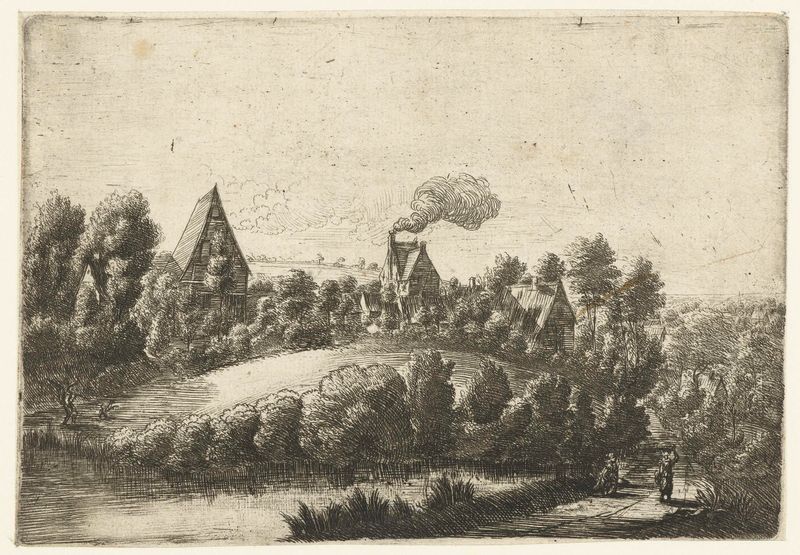
Can beauty exist without sorrow? In Herder bij een bosrand, the delicate interplay of light and shadow invites contemplation, urging us to explore the depths of reflection and the resonance of nature itself. Look to the right at the solitary shepherd, his posture relaxed yet contemplative, as he gazes towards the forest's edge. The earthy tones of his clothing harmonize with the lush greens and browns of the woods, creating a seamless connection between man and nature. Notice how the dappled sunlight filters through the trees, painting the ground with patches of warmth that contrast with the cool shadows.
The meticulous brushwork captures the texture of the foliage and the shepherd's woolly cloak, highlighting Bonnecroy's deft hand and thoughtful composition. Within this serene scene lies an emotional tension; the shepherd's quiet solitude speaks to a deeper introspection, perhaps a longing for connection or a moment of silent grief. The encroaching woods suggest a world of mystery beyond the pastoral landscape, representing the duality of safety and the unknown. This tension is echoed in the juxtaposition of light and dark—the light illuminating the shepherd’s figure while the surrounding forest remains foreboding, hinting at life’s complexities and intrinsic sorrows. Created between 1644 and 1676, at a time when the Dutch Baroque era sought to elevate ordinary subjects through rich detail and emotional depth, Bonnecroy was part of a cultural moment that celebrated the beauty of the natural world.
This painting reflects the artist's response to a landscape infused with existential questions amidst a society grappling with the consequences of prosperity alongside the weight of personal and communal loss.