
Het Fort Hammenhiel vanuit zee gezien door C. Steiger — History & Facts
Could beauty survive in a century of chaos? In a world rife with turmoil, moments of serene decay offer a poignant reminder of nature’s quiet resilience. Focus on the left side of the canvas, where the fortress rises, stoic and imposing against the soft hues of a fading sunset. Notice how the warm golds and deep blues intertwine, illuminating both the fortress and the surrounding sea, infusing the scene with a gentle, melancholic glow. The meticulous brushwork reveals the textures of the crumbling stone, a testament to the passage of time, while the fluidity of the water reflects a sense of motion, juxtaposing permanence with transience. Hidden within the grandeur lies a deeper reflection on the relationship between humanity and nature.
The fortress, once a symbol of strength, now stands as a monument to decay, evoking thoughts of past conflicts and the fragility of human constructs. The calm sea suggests a serene acceptance of this decay, reminding us that beauty often emerges in the most unexpected forms. As the sun sinks lower, the scene encapsulates a bittersweet tension between nostalgia and the inevitable march of time. Created between 1890 and 1910, this artwork emerged during a period of significant change in Europe, marked by industrial growth and political upheaval.
Hübner & Van Santen Roeloffzen, artists known for their detailed landscapes, captured a moment where the old world slowly gave way to the new. Their work reflects a collective yearning for connection to a past that, though decaying, still resonates with beauty and significance.
More Artworks by Hübner & Van Santen Roeloffzen
Browse all →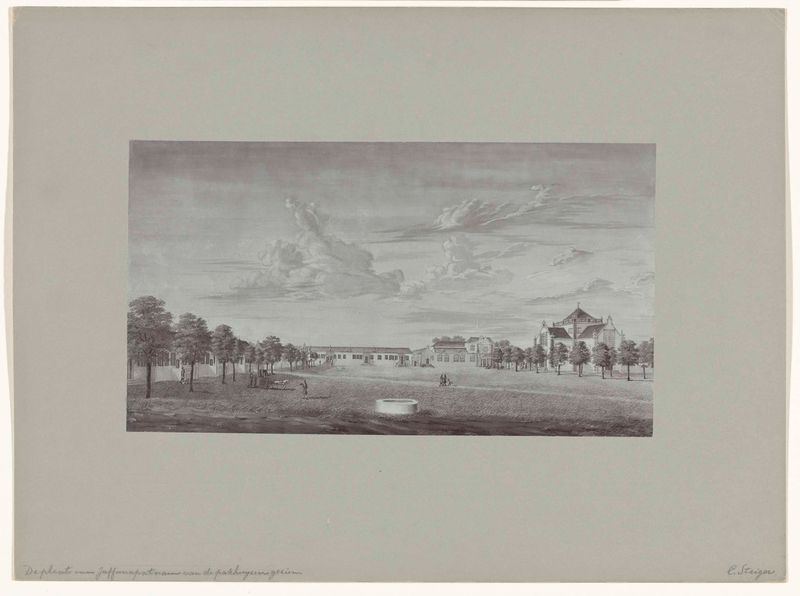
De plaats van Jaffanapatnam
Hübner & Van Santen Roeloffzen

Het huis van den Gouvenerneur te Colombo door C. Steiger
Hübner & Van Santen Roeloffzen

De kerk van Jaffanapatnam gelegen op Sri Lanka, door Steiger
Hübner & Van Santen Roeloffzen

Fort Caliture van de rivierkant door C. Steiger
Hübner & Van Santen Roeloffzen





