
Het Jobs-gasthuis te Utrecht — History & Facts
Who listens when art speaks of silence? In the quietude of the canvas, beauty unfolds in the stillness of the everyday, inviting contemplation of the life it captures. Focus on the gentle interplay of light and shadow that envelops the central building. Notice how the soft, golden hues of the afternoon sun bathe the façade of the Jobs-gasthuis in a warm embrace, revealing intricate details of the architecture. The tranquil scene is meticulously composed, drawing the eye to the harmonious balance of figures meandering through the space, as if time itself pauses to reflect on their purpose. Within this serene depiction lies a dialogue of contrasts: the stillness of the setting versus the soft movement of people, the solidity of brick and stone against the ephemeral quality of light.
Each character, a whisper of humanity, adds emotional depth against the backdrop of architectural grandeur. The artist encapsulates not just a physical place but a moment of connection, where beauty resides in the ordinary, elevating daily life into something profound. Jacobus Versteegen painted this work, likely between 1745 and 1795, during a time when Dutch art was experiencing a resurgence in interest for urban landscapes. Living in Utrecht, Versteegen contributed to a tradition that celebrated local architecture and the integration of human activity within the urban environment, reflecting both the historical context and the evolving relationship between people and their surroundings.
More Artworks by Jacobus Versteegen
Browse all →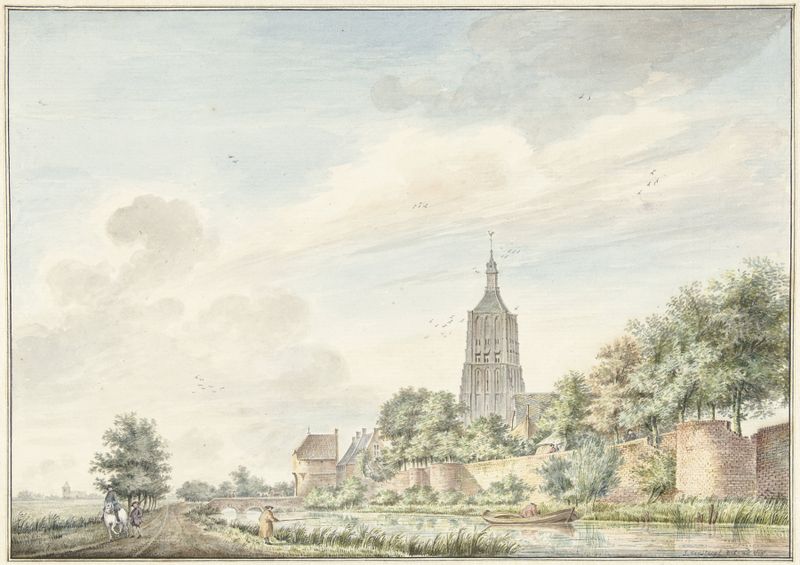

More Architecture Art
Browse all →
The statue of Liberty
Frédéric Auguste Bartholdi

View of Houses in Delft, Known as ‘The Little Street’
Johannes Vermeer

View of Houses in Delft, Known as ‘The Little Street’
Johannes Vermeer

The Cathedral in Rouen. The portal, Grey Weather
Claude Monet

The yellow house
Vincent van Gogh

The Church in Auvers-sur-Oise, View from the Chevet
Vincent van Gogh