Het Sint-Nicolaasplein, Antwerpen — History & Facts
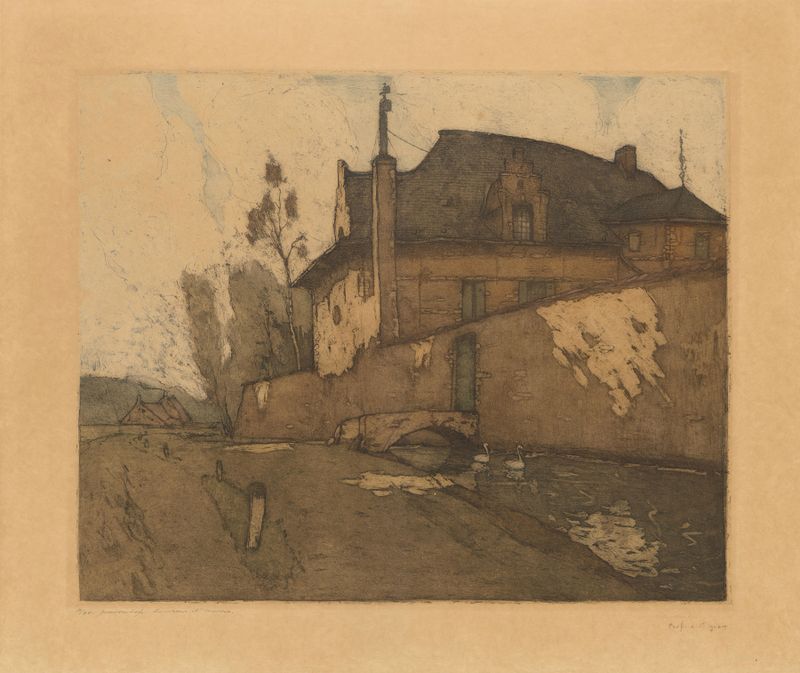
Who listens when art speaks of silence? In the tranquil expanse of Het Sint-Nicolaasplein, serenity emerges from a world steeped in noise, inviting us to pause and reflect. Look to the center of the canvas, where a gentle interplay of light and shadow illuminates the historic architecture of Antwerp. The soft, muted palette of earthy browns and warm grays creates a calming atmosphere, while the delicately rendered buildings rise majestically against the serene sky. Notice how the meticulous brushwork captures the texture of the cobblestones beneath the figures, drawing your eye to the subtle activity of townsfolk engaged in everyday life, encapsulated within an air of stillness. As you delve deeper into the scene, subtle contrasts begin to surface.
The distant figures, swathed in shadows, embody the quiet routines of the city, yet their presence speaks of untold stories and emotional depth. The almost ethereal quality of the light hints at the fleeting nature of time, suggesting a moment suspended between bustle and tranquility. This duality reflects not only the physical space but also the inner lives of those who inhabit it, merging the external with the introspective. Created in 1910, Het Sint-Nicolaasplein emerged during a period of significant societal change in Europe.
Marten Van der Loo was immersed in the vibrant art scene of Antwerp, where he was influenced by various movements advocating for realism and Impressionism. This painting symbolizes the transition of urban life, capturing a moment of quietude amidst the evolving dynamics of modernity in the early 20th century.