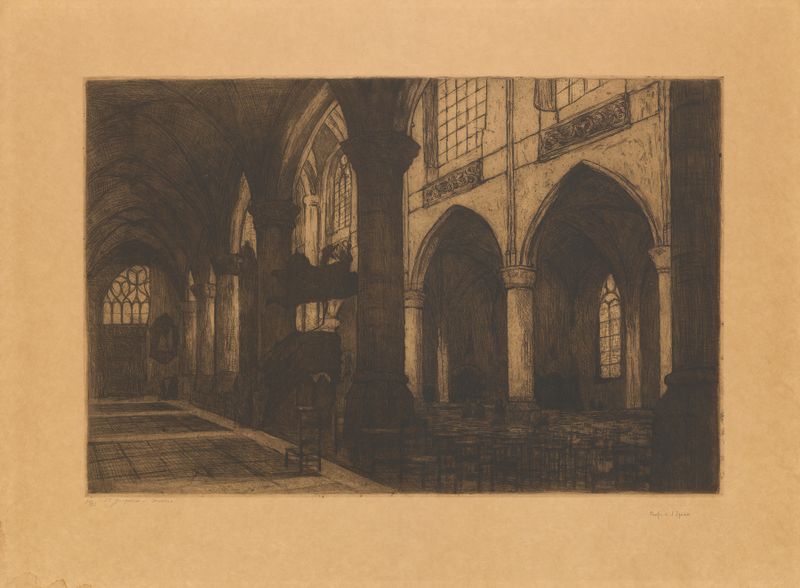
Jezuïetenhof (te Beerschot) buiten Antwerpen — History & Facts
In the hands of Marten Van der Loo, the raw energy of nature is transformed into an ecstatic celebration of life and beauty. Each stroke carries an intensity that invites viewers into a realm where the ordinary transcends into the extraordinary. Look to the foreground of Jezuïetenhof (te Beerschot) buiten Antwerpen, where vibrant splashes of green intertwine with delicate floral hues. Notice how the dappled sunlight filters through the lush canopy, illuminating the scene with an ethereal glow.
The composition feels almost alive, with the swaying plants and dancing colors suggesting a gentle breeze, while the subtle layering of brushwork creates a sense of depth and movement. The artist’s choice of rich, saturated colors evokes a sense of joy and vitality, drawing the eye deeper into this verdant paradise. Delve into the interplay of light and shadow, which speaks to the duality of nature’s beauty. The bright blossoms juxtaposed against darker foliage illustrate a moment of tension, inviting contemplation of the fleeting nature of ecstasy and the inevitability of decay.
The rhythmic repetition of forms conveys a harmonious balance, reminding us of the cyclical nature of life. Each detail, from the fluttering petals to the intricate textures of the leaves, encapsulates a narrative of growth, vitality, and the ephemeral. Created between 1900 and 1920, this work reflects Van der Loo's engagement with the vibrant art movements of the early 20th century in Belgium. During this period, he sought to capture the essence of natural beauty amid a rapidly changing world, where industrialization threatened to overshadow the serene landscapes he cherished.
Amidst this artistic evolution, he embraced the expressive potential of color and form, establishing a legacy that bridges the gap between realism and impressionism.