Heuernte — History & Facts
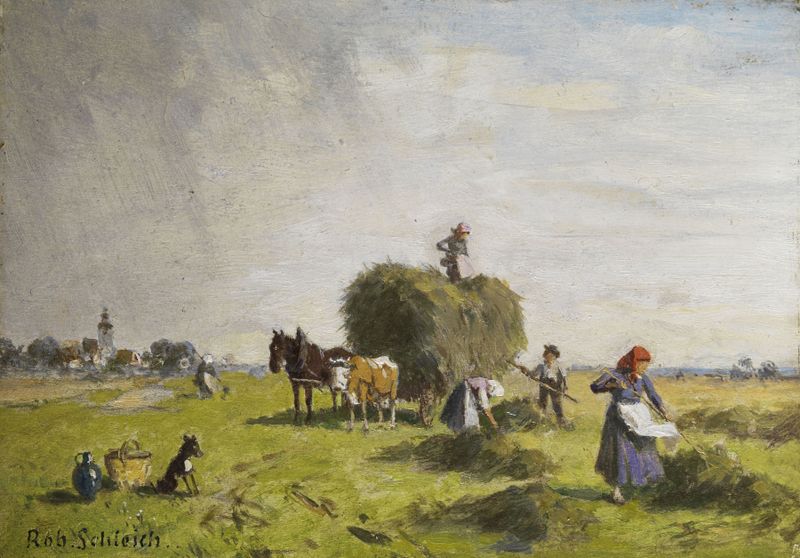
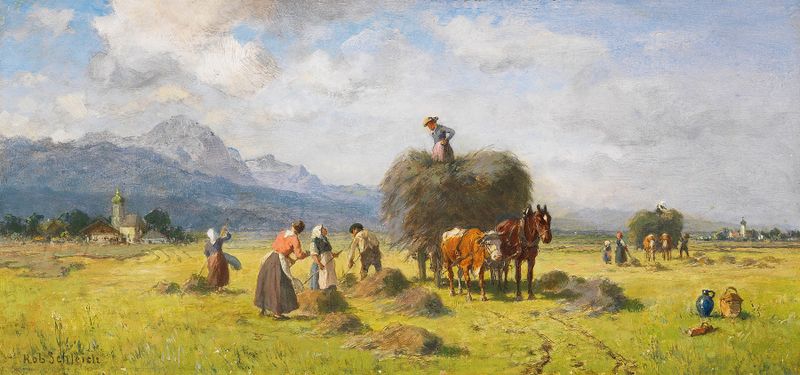
This sentiment resonates deeply within the lush fields of an impending harvest, where nature’s bounty conceals the toil of laborers beneath its radiant hues. The vibrancy of color juxtaposes the underlying stories of struggle, resilience, and fleeting joy. Look to the left, where the sun-drenched fields stretch endlessly, a tapestry of rich golds and greens. The warm light dances across the canvas, highlighting the undulating paths of cut hay and the shadows cast by laborers.
Notice how Schleich uses soft brushstrokes to create a sense of movement, as if the breeze whispers through the grass, capturing a moment suspended in time. The contrast between light and shadow not only adds depth but also evokes a sense of warmth that envelops the viewer. In this artwork, the juxtaposition of labor and beauty becomes apparent. The golden hues of the harvested fields reflect the hopes and dreams of the workers, yet also the weight of their labor.
Each figure, immersed in their task, signifies both a shared community and individuality, evoking the tension between personal struggle and collective effort. This duality mirrors the complexities of rural life in the 19th century, where beauty often emerged from hardship. Created in 1880, this piece reflects Robert Schleich’s deep connection to nature and his observations of rural life in Germany. During this period, the artist was exploring themes of labor and the changing landscapes of agriculture, amidst a society rapidly evolving due to industrialization.
His works resonate with a longing for the pastoral, capturing a moment where the pastoral ideal meets the reality of hard work, revealing a deeper understanding of beauty intertwined with the human experience.