
Heuvellandschap met herders en vee — History & Facts
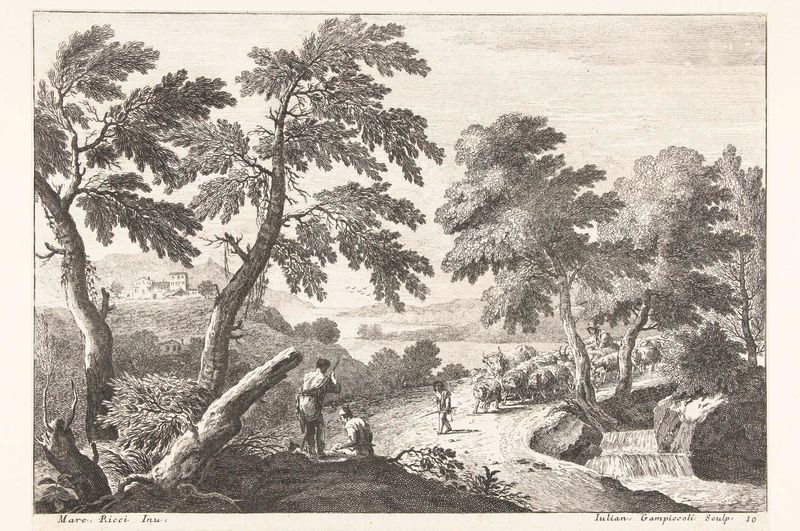
Can paint confess what words never could? In Heuvellandschap met herders en vee, the brushstrokes whisper of transformation, capturing an essence that words often fail to convey. Look to the left at the shepherds, their figures gently merging with the landscape, draped in muted hues that echo the earth’s embrace. Notice how the light falls upon the rolling hills, bathing them in a soft, golden glow that invites the viewer into a dialogue between nature and humanity. The composition is masterfully balanced, with a sweeping horizon that contrasts the solidity of the herders with the airy expanse above, creating an equilibrium that feels both serene and dynamic. In this pastoral scene, the tension lies in the juxtaposition of labor and tranquility.
The sheep, their woolly forms dotting the landscape, symbolize both the simplicity of rural life and the harmony that exists between man and nature. Yet, there’s an underlying urgency in their arrangement, as if the scene is frozen at the cusp of day’s end, suggesting an inevitable transition from light to shadow. Each gentle curve of the hills hints at the ebb and flow of life, a reminder that all things are in constant metamorphosis. Created between 1739 and 1740, this artwork emerged as Giuliano Giampiccoli navigated a period of personal reflection and artistic maturation.
Working during a time when European art was shifting towards lighter, more atmospheric compositions, he found himself influenced by the evolving trends of the Rococo style, which sought to celebrate the beauty of nature and the rhythms of rural existence. This painting stands as a testament to that transformative era, as well as to the artist's own journey of self-discovery.
More Artworks by Giuliano Giampiccoli
Browse all →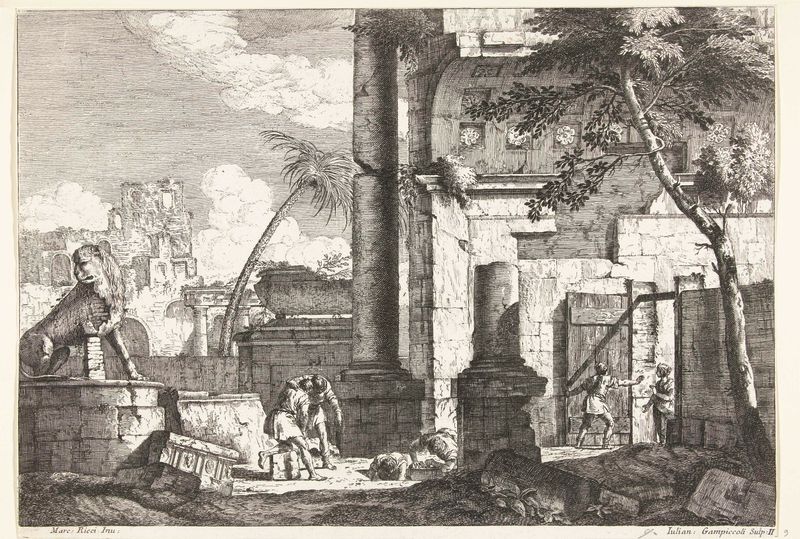
Antieke ruines met graf plunderaars en palmboom
Giuliano Giampiccoli
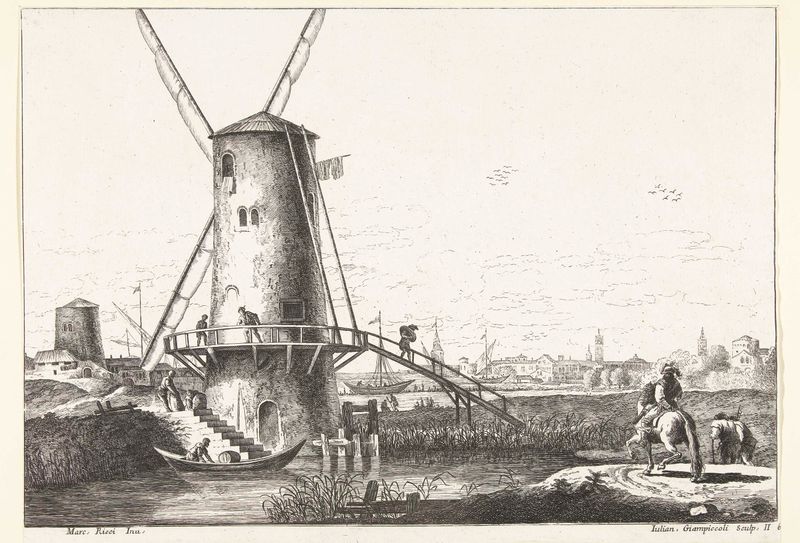
Landschap met molen aan water
Giuliano Giampiccoli
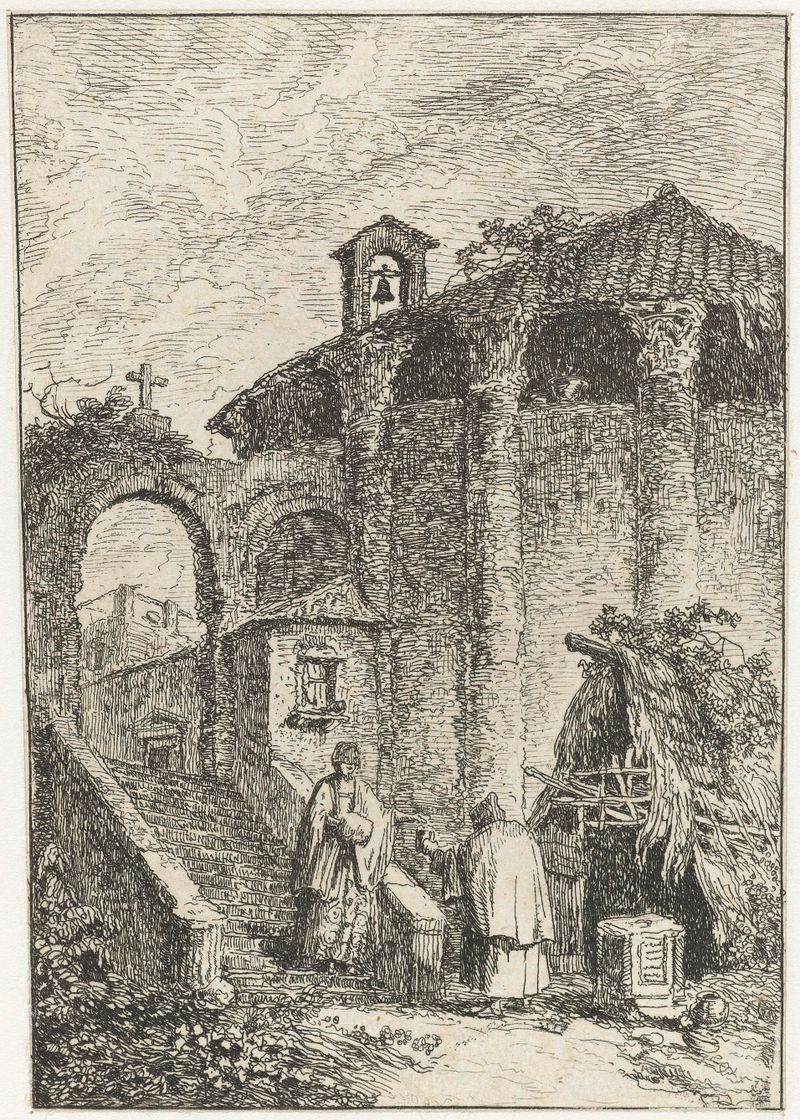
Gezicht op woningen en antieke ruïnes aan rand van stad
Giuliano Giampiccoli
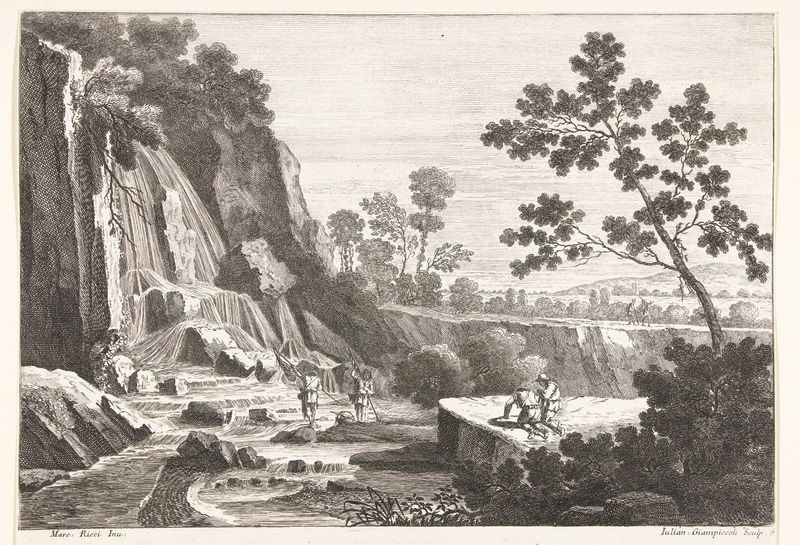
Landschap met waterval en vissers en andere figuren
Giuliano Giampiccoli
Landschap met herders op weg langs kleine waterval
Giuliano Giampiccoli
Heuvellandschap met pelgrims op weg en ondergaande zon
Giuliano Giampiccoli
Landschap met molen aan water
Giuliano Giampiccoli
Rivierlandschap met huis tegen rots
Giuliano Giampiccoli
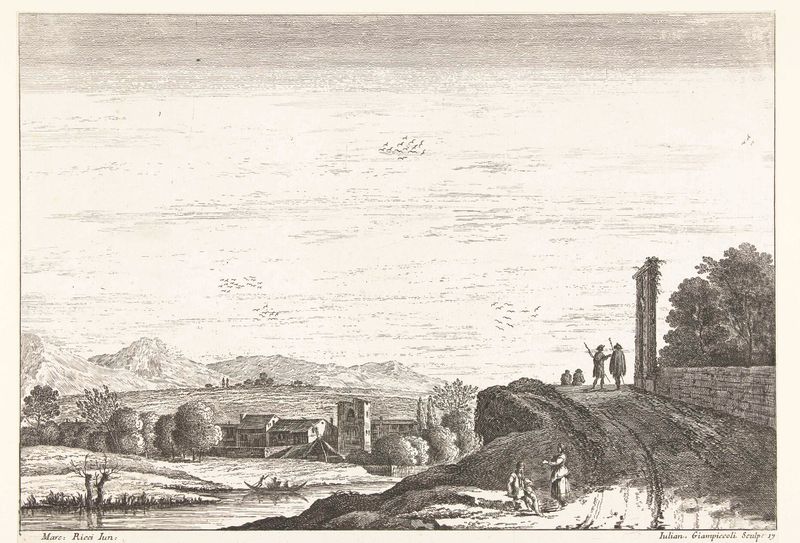
Weg langs rivier met figuren en twee antieke zuilen
Giuliano Giampiccoli
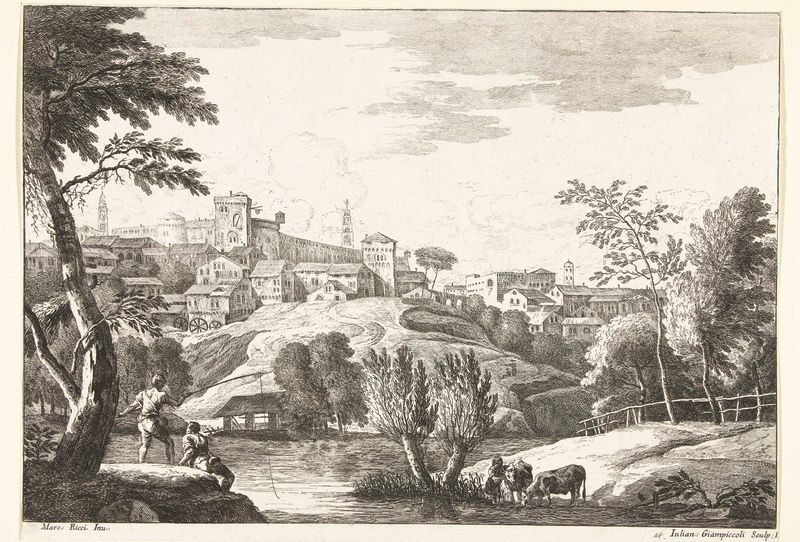
Heuvellandschap met stad en hengelaar
Giuliano Giampiccoli





