Hügelland im Winter — History & Facts
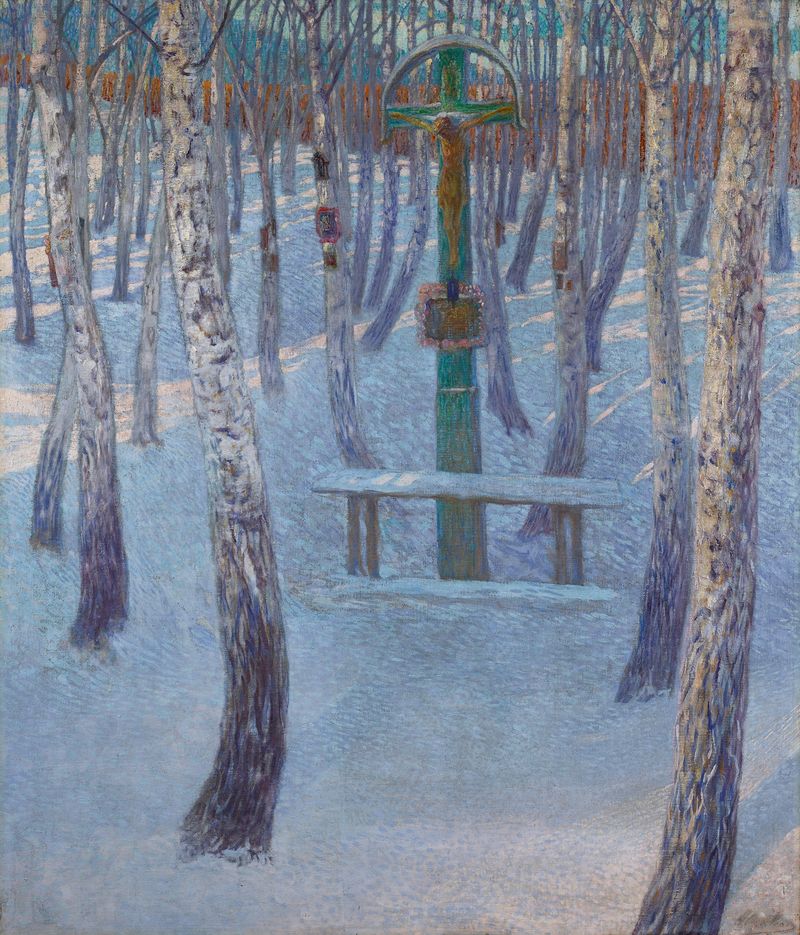
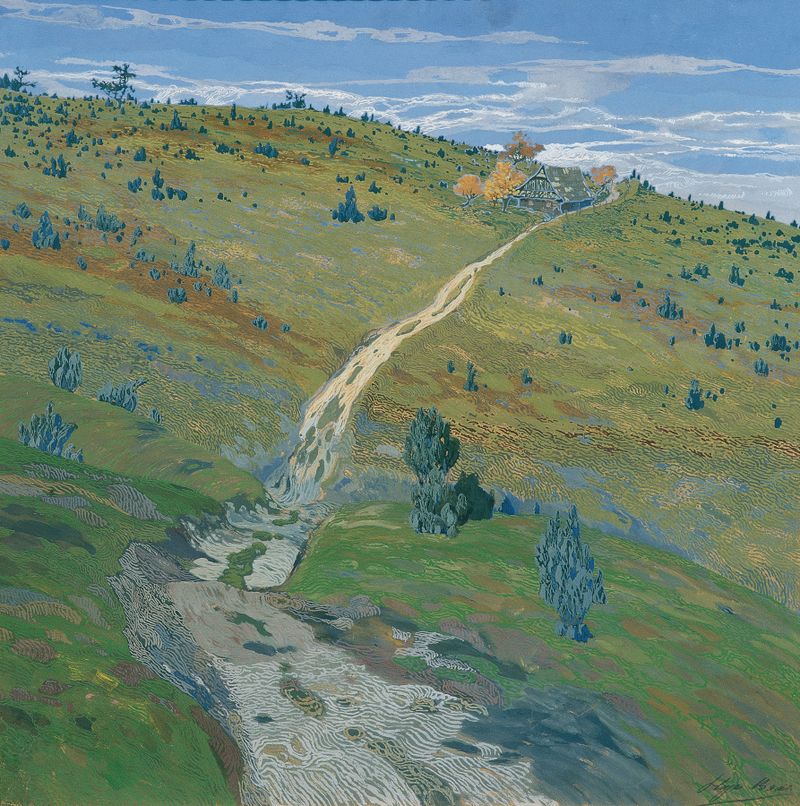
In this quiet landscape, the chill of winter penetrates the canvas, inviting us to explore the unspoken truths buried beneath layers of snow and shadow. The stillness speaks volumes, revealing a world obsessed with solitude and reflection. Look to the horizon where a gentle hill rises, its contours softened by the snow's delicate embrace. Notice the interplay of muted blues and whites, expertly blended to create a sense of depth and vastness.
The broken clouds above allow shards of pale sunlight to filter through, illuminating patches of the untouched ground. This careful treatment of light evokes a serene yet haunting atmosphere, hinting at the emotional weight carried by the scene. Upon closer inspection, small details emerge that enrich the narrative—a cluster of trees huddling together, their bare branches like arms wrapped around one another in quiet companionship. The starkness of the landscape contrasts with the warmth of these intimate connections, suggesting that even in isolation, there exists a yearning for connection.
This duality speaks to the artist's own internal struggles, as if the landscape reflects the tension between solitude and belonging. Created at an unknown date, the work belongs to a period in Hugo Baar's life marked by intense introspection. Operating within the German expressionist movement, he shared a fascination with nature as a canvas for emotion, often depicting scenes that mirrored his own inner turmoil. Amidst the backdrop of a world grappling with upheaval, the artist drew upon his surroundings to capture the essence of longing and obsession in a fleeting moment of winter's embrace.