Waldandacht — History & Facts
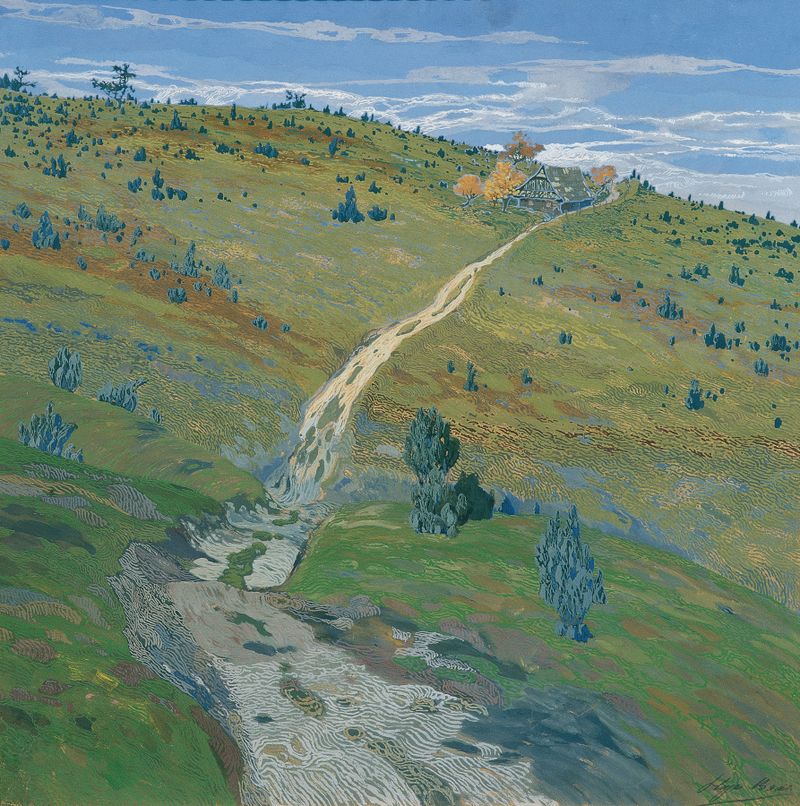
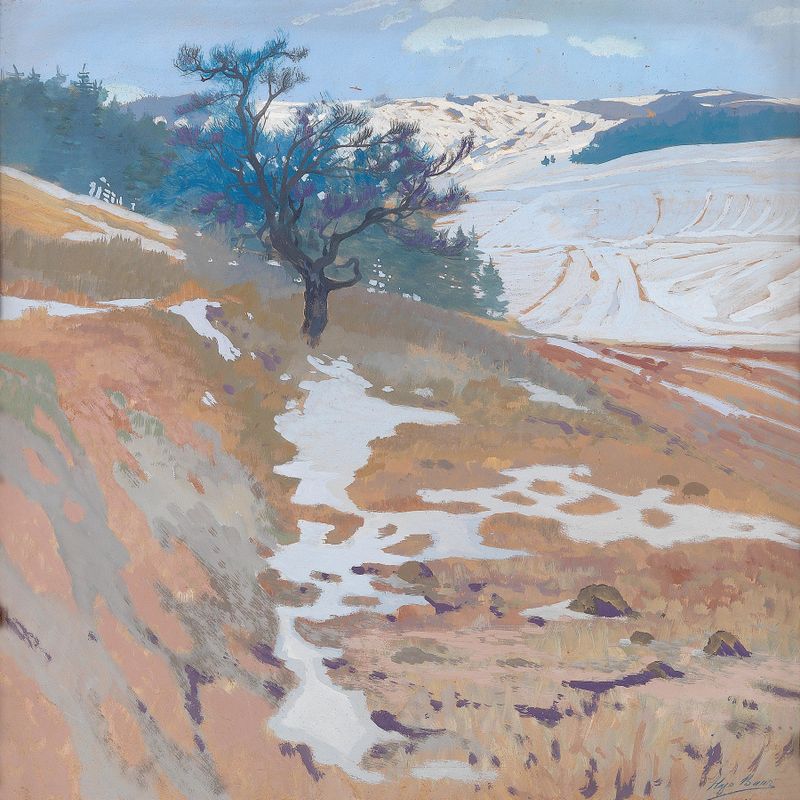
Can beauty exist without sorrow? In Waldandacht, the interplay of serene nature and whispered melancholy suggests an answer as complex as the human experience itself. Look to the center, where a cloaked figure kneels amidst a grove of trees, their bowed head almost blending into the soft greens and browns of the surroundings. The dappled light filters gently through the leaves, illuminating the figure with an ethereal glow that creates an intimate moment of solitude. The muted palette invites contemplation, while the careful brushwork in the foliage evokes the tranquility and complexity of nature, offering a sense of peace that borders on spiritual. Beneath the surface, a tension unfolds—a stark juxtaposition between the beauty of this natural setting and the solitary act of kneeling in prayer or reflection.
The figure’s posture suggests vulnerability, a quiet surrender to forces beyond comprehension, as if the trees themselves are witnesses to their inner struggles. The shadowy areas of the painting contrast sharply with the illuminated figure, hinting at the weight of unspoken thoughts and emotions that lie just beneath the surface, reminding us that beauty often coexists with sorrow. Hugo Baar created Waldandacht in 1900 during a period when the Symbolist movement was gaining traction in Europe, exploring themes of spirituality and introspection. Living in Germany, Baar was influenced by the changing artistic landscape that encouraged emotional depth and personal expression.
The convergence of nature, spirituality, and human experience in this work reflects not only his personal journey but also the broader currents of thought within the art world at the turn of the 20th century.