
Hintersee bei Berchtesgaden — History & Facts
In a world that relentlessly moves forward, art stands as a poignant reminder of moments eclipsed by loss—a testament to what once was. Look to the left where the tranquil waters of Hintersee reflect the surrounding mountains, their peaks cloaked in a soft mist. The brush strokes evoke a serene yet melancholic atmosphere, as emerald greens and deep blues intermingle, creating a soothing yet somber palette. Notice how the delicate interplay of light and shadow enhances the sense of depth, drawing your gaze beyond the canvas and into the vastness of memory itself. Yet, within this idyllic landscape lies an undercurrent of longing.
The stillness of the water hints at unvoiced stories, while the ghostly mountains serve as symbols of both beauty and solitude. Each ripple on the surface of the lake speaks to the fragility of existence, reminding viewers of the transitory nature of life and the weight of what has been lost. The contrast between the vibrant greenery and the shrouded peaks invites us to reflect on the dichotomy of joy and sorrow that permeates our own experiences. Eugen Jettel created Hintersee bei Berchtesgaden in 1864 during a time of significant change in Europe, marked by both burgeoning nationalism and industrialization.
Living in Vienna, Jettel was influenced by the Romantic movement, which sought to capture nature's raw beauty and emotional depth. This piece emerged as part of his exploration of landscapes, a genre that not only celebrated the external world but also served as a vessel for personal and collective memories, a crucial element in the evolving narrative of art.
More Artworks by Eugen Jettel
Browse all →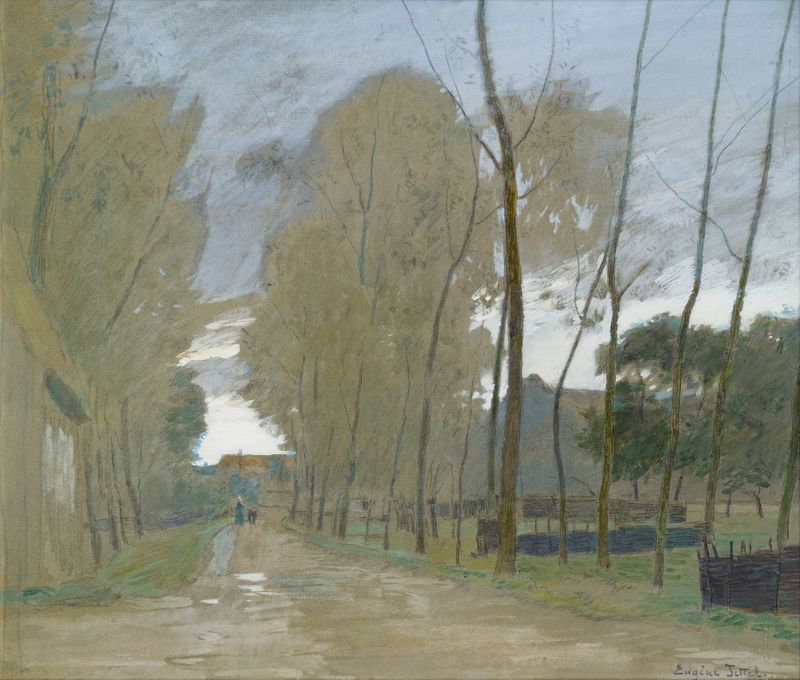
Motiv aus der Bretagne
Eugen Jettel
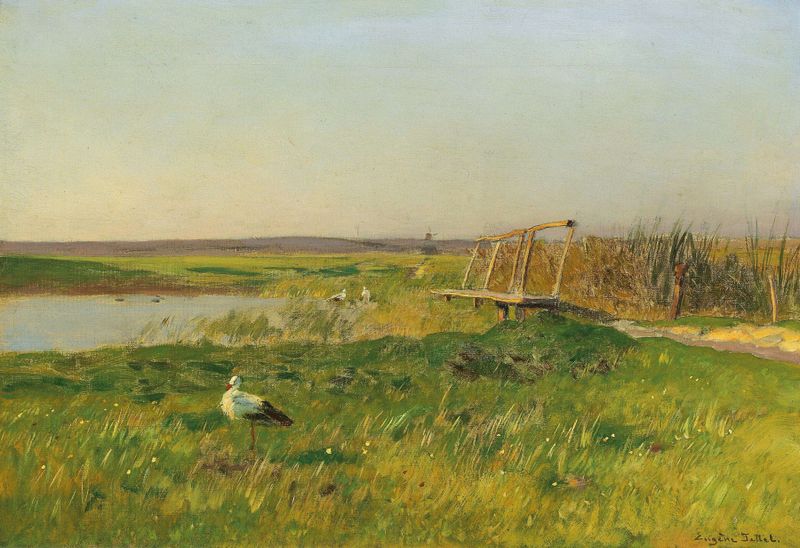
Frühlingslandschaft mit Störchen an einem Weiher
Eugen Jettel

Rinder auf Sommerwiese
Eugen Jettel
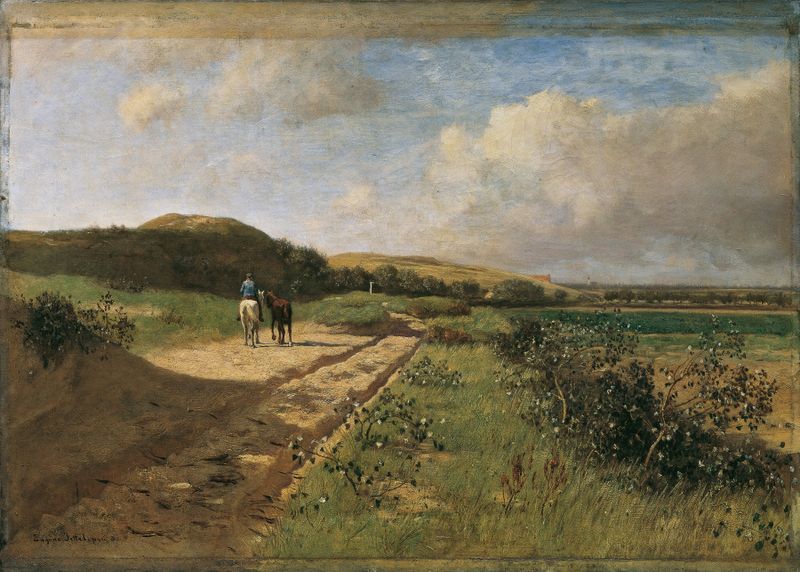
Dünen bei Katwijk
Eugen Jettel
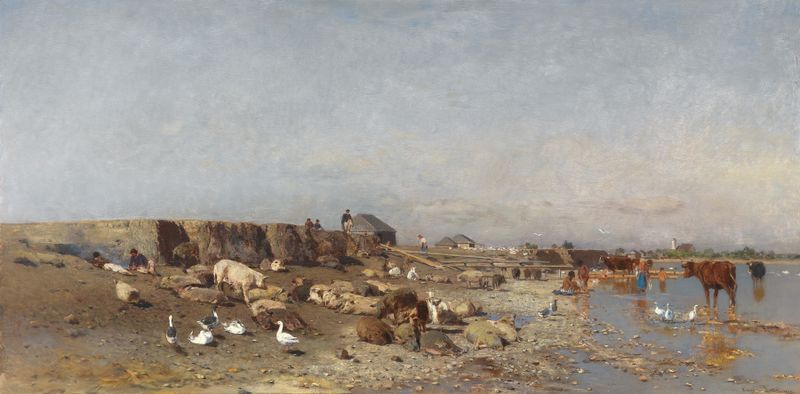
Motiv aus Szered an der Waag
Eugen Jettel
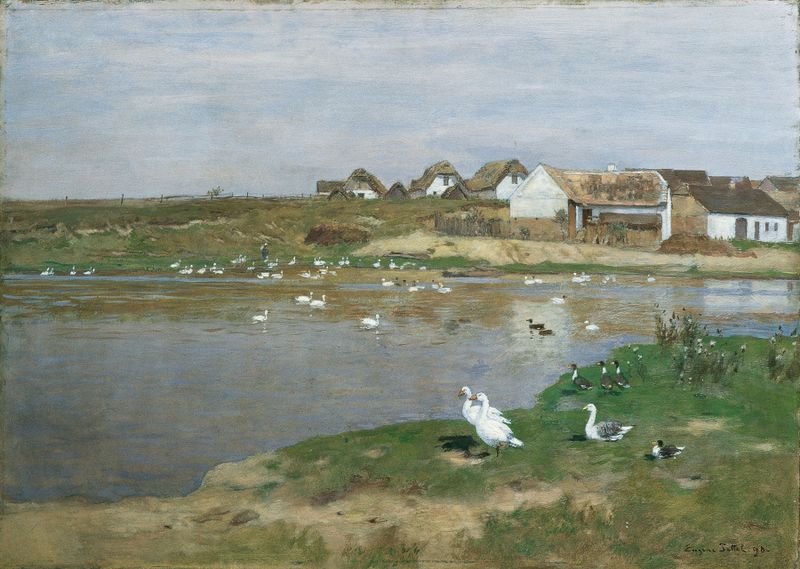
Der Gänseteich in Kotting-Neusiedl
Eugen Jettel

Flusslandschaft Mit Boot
Eugen Jettel

Flusslandschaft mit Kühen
Eugen Jettel

Dorfpartie Strohhütten aus Staatz
Eugen Jettel

Abendlandschaft
Eugen Jettel





